




Tragic Story of Paraguay’s Blind Violin Prodigy
In the world of classical music, there are stories of triumph that shine like bright stars against a dark sky. Then, there are stories where the light is extinguished too soon, leaving behind a silence that echoes louder than the music ever did.
The Ana Lucrecia Taglioretti death mystery is one such story—a narrative woven from threads of extraordinary talent, profound resilience, and a sudden, unexplained end that left a nation in mourning.
Ana Lucrecia Taglioretti was not just a musician; she was a symbol of hope for many in Paraguay. Born blind and facing abandonment in her earliest days, she carved out a life defined by discipline and artistic excellence.
Her journey from a premature infant in an incubator to a violinist in the National Symphonic Orchestra is a testament to the human spirit. Yet, her story is also marked by personal tragedy and a final chapter that remains shrouded in uncertainty.
This article explores the blind violinist Paraguay story, delving into her inspiring life, her struggles with adversity, and the young musician unexplained death case that continues to puzzle those who admired her. While official reports suggested natural causes, the suddenness of her passing at the age of 24 has left many questions unanswered. Here, we look at the inspiring violin prodigy life and death, honoring her legacy while examining the facts surrounding her departure.
Who Was Ana Lucrecia Taglioretti?
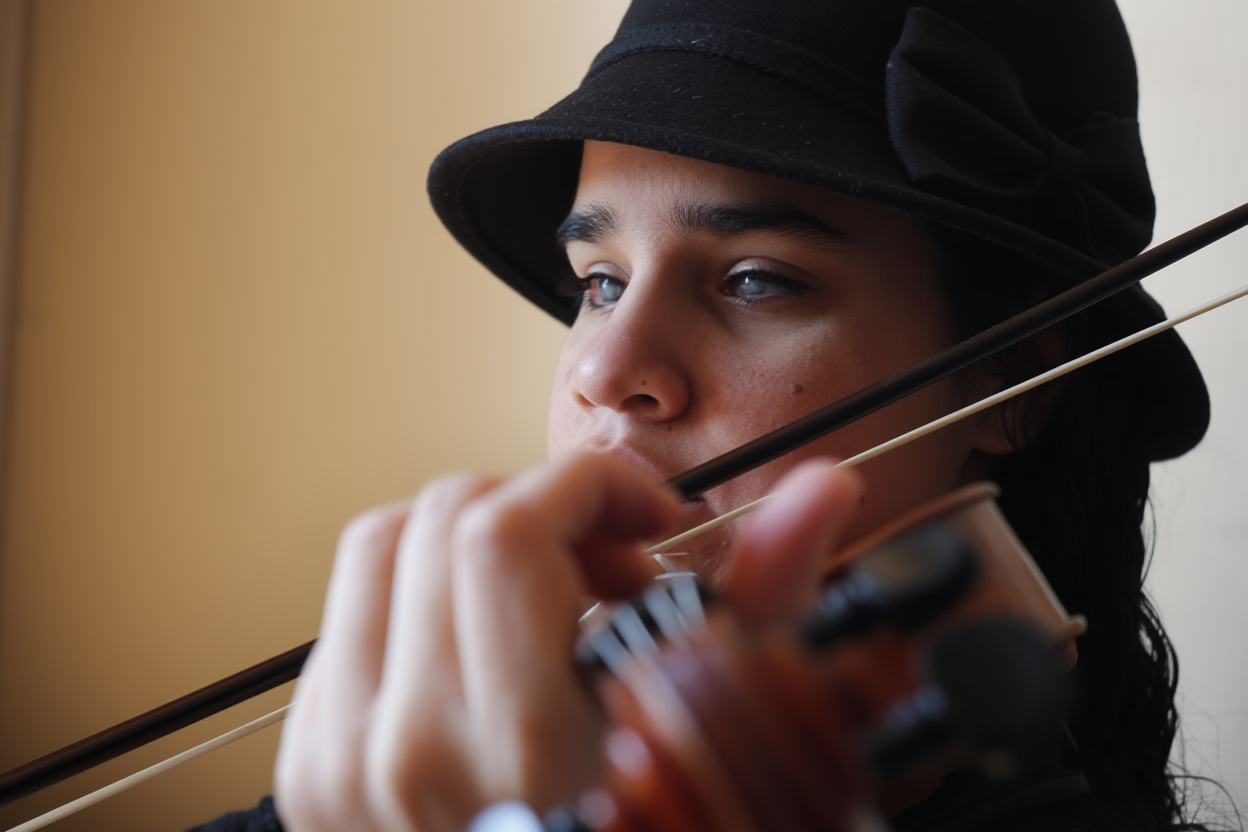
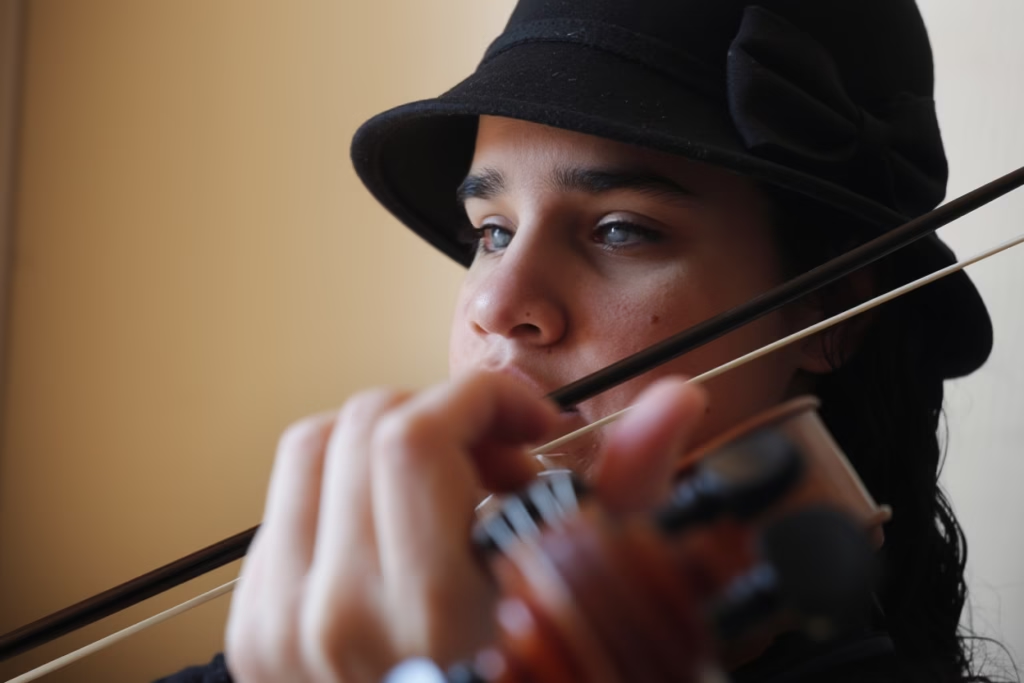
Ana Lucrecia Taglioretti (December 25, 1995 – January 7, 2020) was a Paraguayan violinist whose life was a study in contrasts. To the public, she was a prodigy, a young woman who could navigate the complexities of a violin concerto despite never having seen the sheet music or the instrument in front of her.
To those who knew her personally, she was a survivor, a young woman who had navigated a labyrinth of personal hardships to find solace in melody.
Born on Christmas Day in 1995, Ana’s arrival was fraught with complications. She was born three months premature, a fragile life that required immediate and intensive medical intervention. Her blindness was discovered shortly after birth, a condition that would define much of her life’s challenges but also sharpen her other senses, particularly her hearing.
In a country where opportunities for the disabled can be limited, Ana became a beacon of what was possible. She was known not just for her technical skill on the violin, but for her resilience. She did not seek pity; she sought expression. Her story stands out because it combines the universal language of music with a specific, harrowing journey of overcoming physical disability and social abandonment.
She became a voice for the voiceless, using her instrument to advocate for human rights and the dignity of people with disabilities.
Early Life and Difficult Beginnings
The beginning of Ana Lucrecia’s life reads like a difficult script that she would spend the rest of her years rewriting. Born three months premature, she spent her first few months in neonatal incubation, fighting for survival. When she was finally discharged from the hospital, she faced her first major heartbreak: abandonment.
The Paraguayan Red Cross took custody of the infant, caring for her until she could be placed in an adoptive home. It was a temporary reprieve. According to reports, Ana was adopted, but the placement was not permanent. When her blindness was fully diagnosed, she was abandoned a second time.
This early rejection set a somber tone for her childhood, highlighting the societal stigma that often surrounds disability.
Eventually, she was adopted again, this time by a music teacher. This placement would prove pivotal. It was in this environment that Ana was introduced to the world of sound in a structured way. However, her early home life was not without its complexities. Her adoptive mother reportedly noted in 2007 that Ana had “stunted psychological development.”
As a result, Ana was not enrolled in a traditional school setting. Instead, she was taught with a personal curriculum at home, administering exams directly with the Ministry for Education.
This isolation from peers could have been crushing for a child, but for Ana, it seemed to funnel her energy into her studies and, eventually, her music. The challenges due to her visual impairment were immense. Navigating a world designed for the sighted requires constant vigilance and adaptation.
Yet, even as a young child, early signs of talent and determination began to surface. She possessed an innate connection to rhythm and melody that suggested her future lay not in the shadows, but on the stage.
Discovering Music: A Gift Beyond Limitations
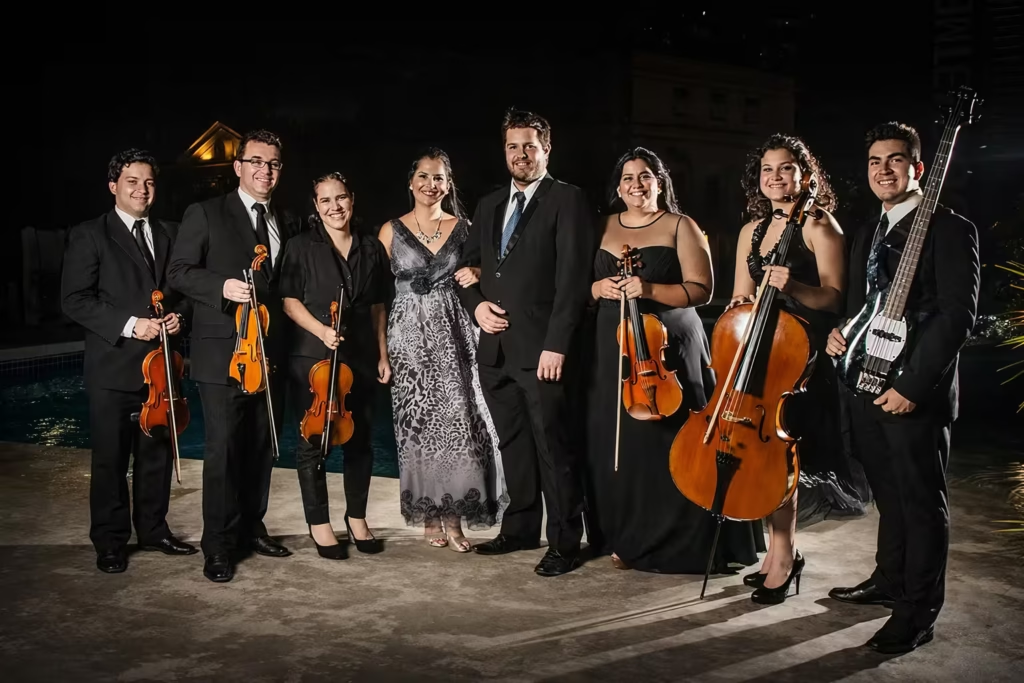
For Ana Lucrecia Taglioretti, music was not merely a hobby; it was a lifeline. She began her musical education at the tender age of five. Her journey did not start with the violin, but with the piano. Under the tutelage of René Ayala, she learned the fundamentals of music theory and keyboard mechanics. The piano provided a foundation, a way to understand harmony and structure.
By the age of six, her talents were already being recognized. She joined the Choir of the Sanatorio Internacional de Luque. Singing allowed her to express emotion directly, using her voice as an instrument. However, her musical path was one of exploration and refinement. In 2003, at the age of eight, she joined the children’s and youth orchestra project “Sonidos de la Tierra” (Sounds of the Earth). This project, directed by Luis Szarán, is renowned for using music as a tool for social development in Paraguay.
It was within this orchestra that Ana’s focus began to shift. She took violin lessons with Luis Graciani. The transition was not immediate. As she recalled in interviews, she had to make difficult choices early on. “From a very young age, I had to make important decisions,” she said. “I gave up the piano for singing, then I chose between the harp and the violin, and I also gave up singing to specialize in the latter.”
The violin became her main focus. It was a demanding instrument, requiring precise finger placement and bow control—tasks made exponentially harder by her blindness. Yet, Ana mastered it. She relied on her acute sense of hearing and her memory, internalizing the music until it became a part of her.
By 2005, she had advanced enough to continue her studies at the National Conservatory of Music. She also joined one of the orchestras at the Miranda Conservatory, taking classes with a roster of distinguished teachers including Silvio Rodríguez, Marc Clement, and Blas Vibe.
This period of training was crucial. It transformed a talented child into a disciplined musician. The violin became her voice, allowing her to communicate feelings that words could not capture. It was a gift that transcended her limitations, proving that her lack of sight did not diminish her ability to see the beauty in music.
Rise to Recognition in Paraguay
As Ana honed her craft, she began to step out of the conservatory and into the national spotlight. Her rise to recognition in Paraguay was steady and earned through sheer hard work. After her conservatory years, she joined the group Urban Sound (Sonido Urbano), performing alongside Jimena Ramírez and Rodrigo Espinosa. In October 2014, they opened for the Harp Twins concert at the Paraguayan American Cultural Center, a significant gig that showcased her versatility.
A major milestone in her career came in April 2014, when she joined the National Symphonic Orchestra of Paraguay. This was no small feat. The National Symphony is the premier musical ensemble in the country, and securing a position there placed Ana among the elite musicians of her generation. It was a validation of her skill and her dedication.
Her presence in the orchestra led to numerous invitations to participate in high-profile events. She became a frequent participant in Teletón Paraguay telethons, using her platform to raise funds and awareness for children with disabilities. She also performed at events organized by the United Nations Paraguay and Global Infancia, further cementing her role as a cultural ambassador for the disabled community.
Ana’s reputation extended beyond classical circles. She performed in both national and international musical festivals, sharing the stage with a diverse array of artists. Her ability to adapt her classical training to different genres made her a sought-after collaborator.
She performed with artists such as Carlos Vives, Rolando Chaparro, and Lizza Bogado. These collaborations showed that Ana was not confined by genre; she was a musician who could bridge gaps between different styles of music, bringing her unique sound to pop, folk, and classical audiences alike.
Career Highlights and Achievements
Ana Lucrecia Taglioretti’s resume was impressive, especially considering her young age. One of her most notable achievements was the release of her self-titled album in November 2010. This was not just a collection of songs; it was a statement. The album was released with the support of Amnesty International as part of the campaign “A Violin for Human Rights” (Un violín a favor de los derechos humanos).
The album promoted a message of dignity for all people. It included messages from Amnesty International, highlighting the intersection of art and activism. Ana confessed in interviews that she didn’t necessarily enjoy being a soloist, preferring the camaraderie of a group. “I prefer being in a group and contributing what I can to make it better,” she concluded. This humility endeared her to her peers and the public.
Her collaboration with Colombian superstar Carlos Vives remains one of the most talked-about moments of her career. The story of how they met is almost legendary. In October 2013, Ana attended a Vives concert in Rakiura without a ticket. She was a fan, having listened to his music since she was very young. Despite not having a ticket, she was recognized by members of the production company G5. They not only let her in but took her backstage.
Vives, seeing her with her violin, invited her to play. They performed “La Tierra del Olvido” together. Ana described it as the most moving moment of the concert. “When he saw me carrying the violin, he invited me to play with him before I even asked.
Today I believe that anything is possible,” she said, her voice filled with emotion. This unexpected opportunity highlighted her readiness; she was prepared to seize the moment when it arrived.
In 2011, she was awarded the Young Leader of the Year Award by the Paraguay Leaders Fund, recognizing her not just as a musician, but as a youth leader. She participated in benefit concerts, such as the one on September 23, 2019, to help Paraguayan Chaco families affected by drought and wildfires. She collected clothes and non-perishable food items for the victims, showing that her compassion extended beyond the stage.
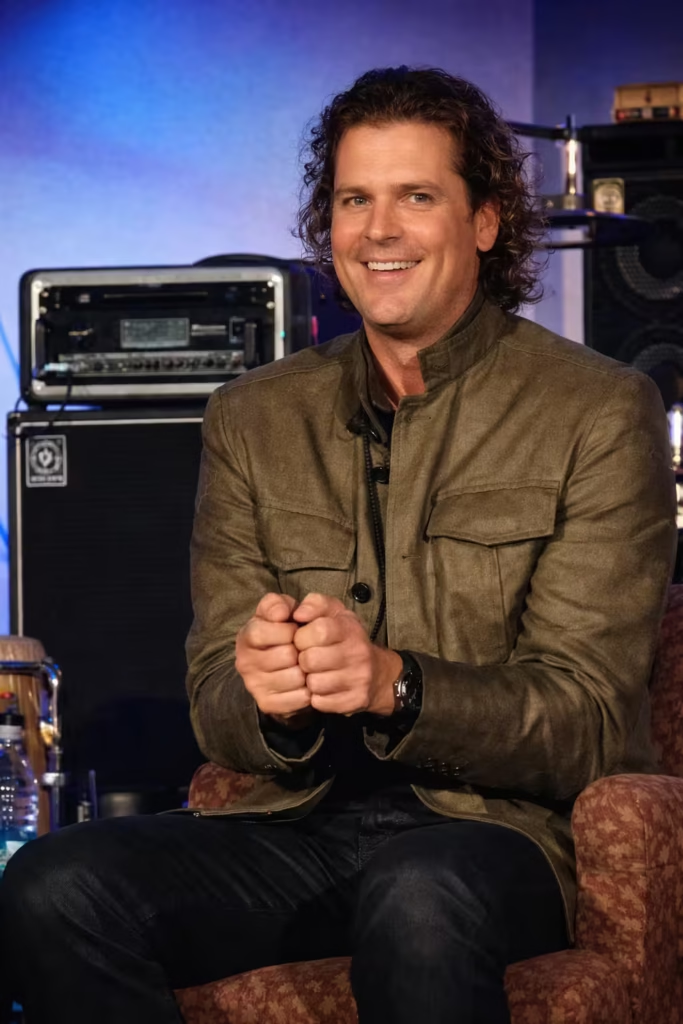
(Carlos Vives, who in October 2013 invited Ana Lucrecia to perform with him after she went to his concert without a ticket)
Personal Struggles Behind the Success
While the public saw a rising star, Ana’s personal life was marked by significant turmoil. Behind the applause and the accolades, there were reports of domestic abuse and emotional instability that cast a shadow over her teenage years.
In September 2012, when Ana was sixteen, reports surfaced that she was the victim of domestic abuse at the hands of her adoptive mother. The situation came to light after neighbors raised concerns. Ana was repeatedly found sleeping in garden chairs after being locked out of the family home, sometimes with her violin and clothes scattered around the garden.
The situation escalated when Ana reportedly mentioned contemplating suicide as an escape to a neighbor. This triggered a police and child services investigation. Neighbors’ complaints included a video of Ana speaking in one of their houses after she had run away to have dinner there. In the video, Ana stated that she had run away from home in March 2012 to go to the police but was picked up and verbally abused by her mother.
The legal system eventually intervened. After listening to her wishes, a judicial order sentenced that Ana would have a substitute family. She was 16 years old at the time and lived with this substitute family until she was 20 years old.
These experiences undoubtedly left a mark on her psychological well-being. The balance between her soaring talent and her harsh personal reality was a difficult one to maintain. The reports of abuse and the instability of her home life stand in stark contrast to the poised musician the public saw on stage. It is a reminder that talent does not immunize a person from trauma, and that for many young artists, the stage is both a refuge and a performance mask.
The Final Days Before Her Death
As 2019 drew to a close, Ana Lucrecia Taglioretti was 24 years old. She was living independently in an apartment located on Piribebuy Street, between Chile and Alberdi, in Asunción. This move toward independence was a significant step, signaling her desire to manage her own life after the turbulence of her teenage years.
The timeline leading up to January 2020 appears normal on the surface. She had recently participated in the benefit concert for the Chaco families in September. There were no public indications of immediate distress or health crises in the days prior to her death. She was active in her career and continued to be a presence in the cultural life of Asunción.
However, the days immediately preceding January 9, 2020, remain largely private. She was living alone, which, while a sign of independence, also meant she was without immediate support should a medical emergency occur. The isolation of her living situation would later become a focal point in the discussion surrounding her death.
Discovery of Her Death
The tragic discovery was made on the afternoon of January 9, 2020. Ana’s mother, concerned after receiving no answer when she rang the doorbell of Ana’s apartment, called a locksmith to gain entry. Upon entering the apartment, the devastating truth was revealed: Ana Lucrecia Taglioretti was dead.
It was estimated that her body had been there for approximately 48 hours. This meant she had likely passed away around January 7, 2020. The circumstances of the discovery were shocking to her family and the musical community. The image of a young, vibrant life ended in solitude was a difficult one to process.
Both Paraguay’s National Culture Secretary and the National Symphonic Orchestra paid tribute to the violinist almost immediately, lamenting her death and giving their condolences to the family. The news spread quickly through social media and local news outlets, sending a wave of grief through the country.
Autopsy Findings and Official Statements
Following the discovery, an investigation was launched to determine the cause of death. On January 10, the prosecutor leading the investigation gave a statement to the press. The initial findings from the autopsy were released, providing some clarity but also leaving room for speculation.
The prosecutor stated that the autopsy disregarded a violent death. The report noted that the body “did not have any fractures” or signs of external trauma. This finding was crucial in ruling out foul play or physical assault as the cause of death. The authorities hinted that the cause of death was likely natural.
The Public Ministry explained that further autopsy results were expected in three weeks to provide a definitive conclusion. However, information from people close to Taglioretti began to circulate. It was noted that her family had a history of heart conditions. Consequently, a cardiac arrest was suggested as a probable cause of death and was not dismissed by investigators.
Despite the official leaning toward natural causes, the suddenness of the event for a 24-year-old woman kept the Ana Lucrecia Taglioretti death mystery alive in the public consciousness. The lack of a definitive, immediate cause of death allowed for a period of uncertainty.
The Unanswered Questions
Why did the case draw such significant attention despite the suggestion of natural causes? Part of the reason lies in the young musician unexplained death case profile. When a public figure, especially one so young and seemingly healthy, passes away suddenly, the public naturally seeks answers.
There was public curiosity and speculation, though much of it remained neutral. People wondered if there were underlying health issues that had gone undiagnosed. Others speculated about the stress she may have been under, given her history and the pressures of her career. The fact that she was found two days after her death added a layer of tragedy to the event—the idea that she might have been alone in her final moments was a haunting thought for many.
The lack of definitive closure in the immediate aftermath fueled the mystery. While the medical evidence pointed away from violence, the exact mechanism of her death remained a subject of discussion until the final reports were consolidated. For a community that looked up to her as a symbol of strength, the fragility of her life was a difficult pill to swallow.
Public Reaction and Tributes
The reaction to Ana’s death was immediate and profound. The cultural institutions of Paraguay rallied to honor her memory. The National Symphonic Orchestra, where she had been a member, expressed deep sorrow. Her colleagues remembered her not just for her talent, but for her spirit.
Tributes poured in on social media. Fans, fellow musicians, and human rights activists shared stories of how she had inspired them. Many recalled her performance with Carlos Vives, citing it as a moment of national pride. Others remembered her work with Amnesty International, noting how she used her platform for good.
The national mourning was a testament to her impact. She was not just a violinist; she was a representative of what Paraguay could achieve when it supported its vulnerable citizens. Her death was seen as a loss of potential—a future of music and advocacy that would never be realized.
Legacy of Ana Lucrecia Taglioretti
Ana Lucrecia Taglioretti’s legacy is multifaceted. First and foremost, she is an inspiration for disabled artists. She proved that blindness was not a barrier to excellence in the arts. Her technical proficiency on the violin challenged perceptions and opened doors for others with visual impairments to pursue music seriously.
Her contribution to Paraguayan music is also significant. She brought a unique sensitivity to her performances, bridging the gap between classical rigor and popular appeal. Her willingness to collaborate with artists from different genres helped to democratize classical music, making it accessible to wider audiences.
Perhaps her most enduring message is one of perseverance. Her life story—from abandonment to the national stage—is a powerful narrative of overcoming adversity. She showed that resilience is not just about surviving hardship, but about creating something beautiful in spite of it. Her album, “A Violin for Human Rights,” remains a sonic monument to her belief in dignity and justice.
Lessons from Her Life
There are several key lessons to be drawn from the inspiring violin prodigy life and death.
Overcoming Adversity: Ana’s life teaches us that our beginnings do not dictate our ends. Despite being born prematurely, blind, and abandoned twice, she forged a path of success. She did not let her circumstances define her limitations.
The Importance of Support Systems: The struggles Ana faced in her teenage years highlight the critical need for robust support systems for vulnerable youth. The intervention of neighbors and the judicial system, while late, eventually provided her with a safer environment. Her story underscores the importance of community vigilance and the role of social services in protecting at-risk children.
Talent vs. Life Struggles: Ana’s story also illustrates the complex relationship between talent and personal well-being. Being gifted does not shield a person from trauma or mental health challenges. It is a reminder that behind every performer is a human being who needs care, understanding, and support.
Conclusion
The story of Ana Lucrecia Taglioretti is one of light and shadow. It is the story of a blind violinist Paraguay loved, a young woman who turned her pain into music and her struggles into strength. The Ana Lucrecia Taglioretti death mystery may have been medically explained as a natural event, likely cardiac in nature, but the emotional mystery of how such a vibrant life could end so abruptly remains.
We remember her not for the questions surrounding her death, but for the clarity of her life. She was a musician who played with her heart, a survivor who refused to be silenced, and a leader who advocated for the dignity of others. In the silence left by her violin, there is still a message: that talent can flourish in the darkest soil, and that a single life, no matter how short, can resonate with the power of a symphony.
As we reflect on her young musician unexplained death case, let us focus on the inspiration she provided. Let her story encourage us to support the arts, to protect the vulnerable, and to listen more closely to the music that surrounds us. Ana Lucrecia Taglioretti may be gone, but her song continues to play in the hearts of those she touched.
Frequently Asked Questions (FAQs)
What is the Ana Lucrecia Taglioretti death mystery?
The Ana Lucrecia Taglioretti death mystery refers to the sudden and unexplained passing of the renowned Paraguayan violinist in January 2020. Although official autopsy reports indicated no signs of violence or external trauma.
the suddenness of her death at the age of 24 sparked public curiosity. While authorities suggested natural causes, such as a potential cardiac event, the lack of immediate definitive closure led to widespread discussion regarding the young musician unexplained death case.
Who was Ana Lucrecia Taglioretti?
Ana Lucrecia Taglioretti was a celebrated blind violinist Paraguay recognized for her extraordinary musical talent and resilience. Born blind and premature in 1995, she overcame significant early life challenges, including abandonment, to become a professional musician. She was known not only for her technical skill but also for her advocacy for human rights and disabilities, making her inspiring violin prodigy life and death a subject of national importance.
What were the official findings regarding her cause of death?
According to statements from the Public Ministry and prosecutors, the autopsy revealed no fractures or signs of physical trauma on her body. Investigators disregarded the possibility of a violent death. Initial reports hinted at natural causes, with sources close to the family mentioning a history of heart conditions. Consequently, cardiac arrest was considered a probable cause, though the exact medical specifics were pending further toxicological results at the time of public statements.
Did Ana Lucrecia Taglioretti face personal struggles during her life?
Yes, despite her public success, Ana faced significant personal hardships. Reports from 2012 indicated she experienced domestic difficulties during her teenage years, including allegations of abuse by an adoptive family member. This led to judicial intervention and her placement with a substitute family. These struggles highlighted the balance between her public talent and private hardships, adding depth to the narrative surrounding her inspiring violin prodigy life and death.
What were her major career achievements?
Ana achieved several milestones in her short career. She joined the National Symphonic Orchestra of Paraguay in 2014 and released an album supporting Amnesty International’s human rights campaign. One of her most notable moments was an impromptu performance with Colombian superstar Carlos Vives in 2013. She also frequently participated in charitable events, such as Teletón Paraguay, using her music to support social causes.
Where was Ana Lucrecia Taglioretti found?
She was discovered in her apartment located on Piribebuy Street in Asunción, Paraguay. Her mother found her after receiving no answer at the door and calling a locksmith to enter. It was estimated that she had passed away approximately 48 hours before her body was discovered on January 9, 2020. The circumstances of her living alone at the time contributed to the public’s concern regarding the young musician unexplained death case.
Why is she considered an inspiration for disabled artists?
Ana Lucrecia Taglioretti is considered a role model because she achieved professional excellence in a highly competitive field despite being blind since infancy. Her journey from neonatal incubation to the national stage demonstrated that visual impairment did not limit artistic potential. Her life story continues to encourage disabled artists to pursue their talents, reinforcing the message of perseverance found in the blind violinist Paraguay story.
How did the public react to her passing?
The reaction was one of profound national mourning. Paraguay’s National Culture Secretary and the National Symphonic Orchestra issued official tributes lamenting the loss. Fans and fellow musicians shared memories of her kindness and talent on social media. The outpouring of grief reflected her impact not just as a musician, but as a symbol of hope, ensuring that her legacy endured beyond the Ana Lucrecia Taglioretti death mystery.
Disclaimer
The content presented in this article is based on publicly available information and is intended for informational and educational purposes only. While every effort has been made to ensure accuracy, details surrounding ongoing or unsolved cases may change over time as new information becomes available.
This article does not intend to make accusations, assign guilt, or interfere with any active investigation. Any individuals mentioned are presumed innocent unless proven guilty in a court of law.
The views and interpretations expressed are those of the writer and do not represent official statements from law enforcement agencies or affiliated organizations.
This content may include sensitive topics related to crime and violence. Reader discretion is advised.
If you have any information related to this case, please contact the appropriate local authorities.
Case Source:
This case information was compiled from publicly available sources, including official records, news reports, and case archive websites such as UltimaHora This article is intended for informational and educational purposes only, and all information is based on sources believed to be accurate at the time of writing.