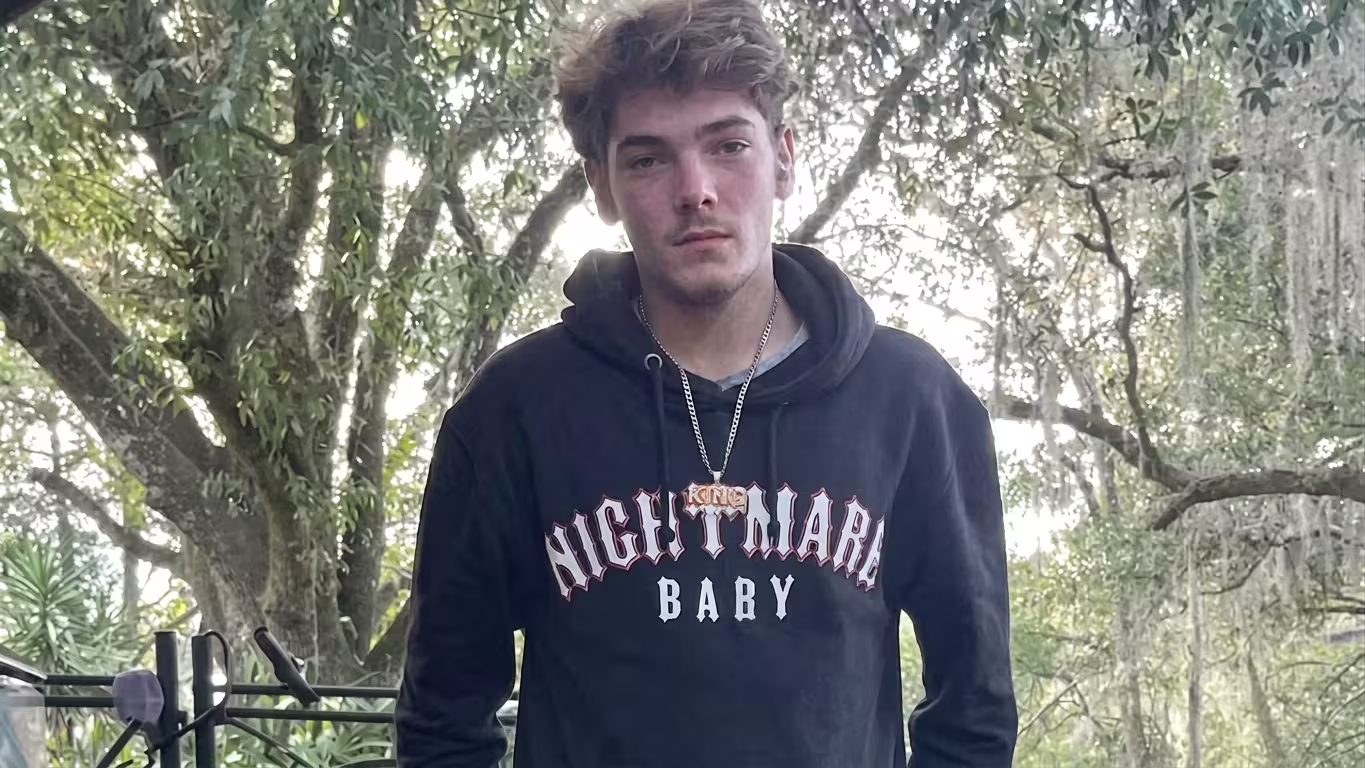

Cody Key Tampa Cold Case: What We Know About the Unsolved 2023 Shooting
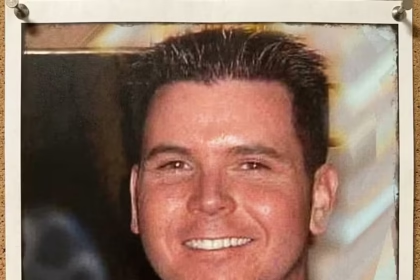
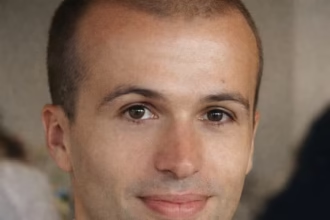
In the growing list of unresolved investigations across Florida, the Cody Key Tampa cold case stands out for the heartbreak left behind—and for the questions that still haven’t been answered. Cody Key was only 19 years old when his life ended after a late-night shooting in Tampa near North 49th Street and East Diana Street. Months later, his loved ones were still holding tight to the memories that defined him long before the headlines: a quiet personality, a gentle presence, and a smile that family members say could instantly soften a hard day.
This article is a freshly written, AdSense-friendly, SEO-optimized overview of Cody’s story and the broader reality of unsolved cases—without graphic details, sensationalism, or rumor. It also includes practical, responsible ways the public can support cold-case efforts and share information safely.
Quick Summary
- Who: Cody Key, 19
- Where: Near N 49th Street and E Diana Street, Tampa, Florida
- When: Late night February 13, 2023 (he passed away the next day)
- Status: Unsolved homicide investigation
- Tip lines: Hillsborough County Sheriff’s Office and Crime Stoppers of Tampa Bay (listed near the end)
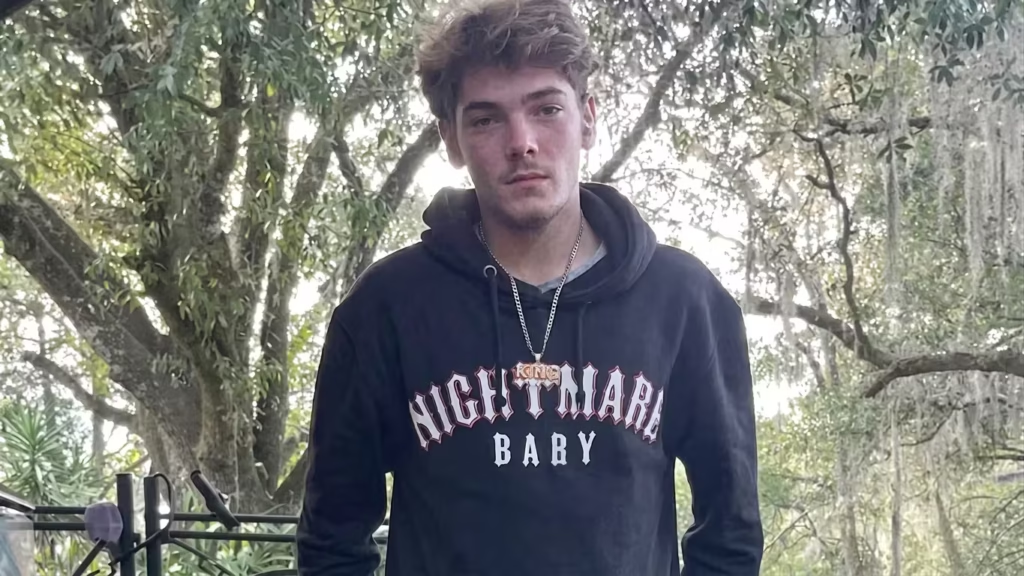
Remembering Cody Key Beyond the Case Number
When a case goes unsolved, it can start to feel like the person at the center of it is being reduced to a date, a location, and a few lines of summary. But families don’t experience loss that way. They remember voices, routines, inside jokes, and small moments that never make it into official reports.
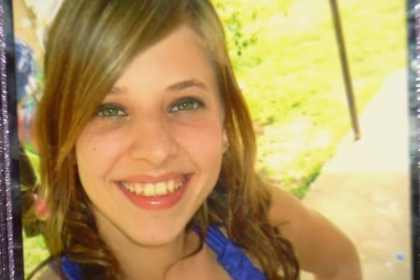
A relative, Tiffany Key, has described Cody as someone whose warm expression and soft energy made him instantly likable. Family members recall that even when he kept to himself, he still enjoyed being close to people who cared about him—especially in familiar spaces where he felt safe.
A Quiet Personality With a Big Heart
By many accounts, Cody was naturally shy. He wasn’t always the loudest person in the room, and he often dressed in a way that helped him blend in—hoodies, casual clothes, low-key style. But “quiet” didn’t mean distant. He could be playful with those he trusted, and relatives remember him as someone who tried to lift the mood when people around him were down.
Instead of long speeches, his humor came in quick, spontaneous moments—funny faces, silly bits, and off-the-cuff raps that made the people around him laugh. Those memories have become especially meaningful as his loved ones search for ways to hold on to who he was.
A Cousin Who Felt Like a Little Brother
Family relationships don’t always fit neat labels. In Cody’s case, Tiffany—though technically his cousin—has said their bond felt more like a big-sister/little-brother relationship. They grew up close by, and she often looked out for him the way an older sibling might: making sure he had what he needed, spending time with him, and including him in everyday life.
When she got a car and could drive, those small freedoms turned into real support—rides, errands, trips to get clothing, and moments of normal life that mattered.
The Comfort of Familiar Places: Gaming, Laughing, and Just Being Home
Some of the clearest memories families hold after a loss are the simplest ones. For Tiffany, one of those “ordinary but unforgettable” memories was playing PlayStation together, side by side, in a bedroom where Cody could relax and just be himself.
It’s the kind of detail that may not seem important to outsiders—but to loved ones, it’s everything. It’s proof that before tragedy, there was life: routines, hobbies, and comfort.
What Happened the Night of February 13, 2023 (Non-Graphic Overview)
According to publicly shared case details, Cody was walking late at night on February 13, 2023, near the intersection of N 49th Street and E Diana Street in Tampa. Law enforcement was called to the scene at approximately 11:30 p.m. after reports of a shooting. Cody was taken to a hospital, where he later died the next day—Valentine’s Day.
Authorities have not publicly confirmed all circumstances surrounding the incident, and the case remains unsolved.
It’s important to be careful with language in ongoing investigations. Without verified updates, responsible reporting avoids speculation—no guessing motives, no naming suspects, and no spreading social media theories. What remains certain is that a young man lost his life, and the people who loved him have been left with grief and unanswered questions.
When a Case Goes Unsolved: What Families Live With
Unsolved cases create a unique kind of pain. Families grieve, but they also wait—sometimes for years—for clarity that may never fully come. Every passing holiday, birthday, and milestone becomes complicated. The emotional toll can show up in many ways:
- Chronic stress and anxiety
- Anger or guilt (even when no one is at fault)
- Sleep problems
- Difficulty concentrating
- Withdrawal from social circles
- A constant sense of unfinished business
For some relatives, staying close to the area where everything happened feels unbearable. In Cody’s story, Tiffany eventually moved away from the Tampa area and focused on building her own family life—carrying forward the love she had for him into the way she raises her children.
This is a common, human response: after trauma, some people stay and fight publicly, while others cope by creating distance and rebuilding privately. There is no single “right way” to grieve.
The Role of Community Support After Sudden Loss
In the days after Cody’s passing, his sister started a GoFundMe to help cover funeral and service costs. Sadly, this is another reality many families face. Even a modest service can become financially overwhelming—especially when the loss is sudden and the family has had no time to prepare.
Community support often comes in different forms:
- Donations to help with funeral expenses
- Sharing verified information from law enforcement (not rumors)
- Showing up respectfully at memorials
- Offering meals, childcare, or transportation
- Sending messages that honor the person’s life (not just the tragedy)
These acts don’t solve a case, but they reduce the isolation families often feel.
Why Cold Cases Happen (and Why Some Do Get Solved Later)
A case can remain unsolved for many reasons—none of which mean the victim mattered less. Common factors include:
1) Limited Witness Cooperation
People may fear retaliation, worry about being labeled a “snitch,” or simply not trust the system. Sometimes they saw something small—like a vehicle or a person running—but don’t realize it could matter.
2) Not Enough Usable Evidence
Evidence can exist but still be difficult to use: low visibility at night, lack of cameras, unclear timelines, or incomplete details.
3) Delays in Tips
In many cases, people come forward later—after relationships change, guilt grows, or safety improves.
4) Overloaded Resources
Law enforcement agencies often juggle multiple major cases at once. Even with committed investigators, time and staffing can affect pace.
5) Breakthroughs From Technology
Some unsolved cases move forward later because of:
- Improved video enhancement
- Better forensic testing
- New data connections
- Updated database matches
Cold cases can remain active in the background until a new lead helps reopen a path forward.
How to Share Information Responsibly (Without Putting Yourself at Risk)
If someone believes they have information related to an unsolved case, it’s understandable to feel conflicted. The safest approach is to avoid public discussion and instead share information privately through official channels.
Here are responsible guidelines:
Do:
- Write down what you know (dates, times, locations, descriptions)
- Share facts, not assumptions
- Submit tips directly to law enforcement or Crime Stoppers
- If you have photos or video, preserve the original file
Don’t:
- Post accusations online
- Attempt to investigate on your own
- Confront anyone you suspect
- Share unverified rumors (they can derail cases and harm innocent people)
Even “small” observations can matter—like a car you saw parked oddly, a person you noticed, or a conversation you overheard that didn’t make sense at the time.
Case Location Context: Why Intersections Matter in Investigations
You’ll often see cases referenced by the nearest major intersection—like N 49th Street and E Diana Street—because it helps investigators and the public anchor details to a specific area.
Intersections can be important because they often involve:
- Traffic patterns and potential camera routes
- Nearby businesses with surveillance
- Lighting conditions
- Common walking paths
- Neighborhood witnesses
If someone lives or works near the area, even routine recollections can help establish a timeline.
Personal Safety Tips for Late-Night Walking (Practical, Non-Alarmist)
Not every tragedy can be prevented, and victims are never to blame. Still, it’s reasonable to share general safety guidance—especially for teens and young adults who walk at night.
Consider these practical habits:
- Stay in well-lit areas when possible
- Walk with a friend if you can
- Keep your phone charged and location sharing enabled with someone you trust
- Avoid distractions (like loud headphones) in higher-risk areas
- Trust your instincts and change direction if something feels off
- If you see immediate danger, contact emergency services
These steps are about reducing risk—not assigning responsibility.
Frequently Asked Questions
Is the Cody Key case still unsolved?
Based on publicly shared information, the investigation has been described as an unsolved homicide.
When did the incident happen?
The shooting occurred late on February 13, 2023, and Cody died the following day.
Where did it happen?
Near the intersection of North 49th Street and East Diana Street in Tampa, Florida.
How can someone share a tip?
Contact the Hillsborough County Sheriff’s Office or Crime Stoppers of Tampa Bay. If you are concerned about privacy, Crime Stoppers offers a way to share information anonymously.
How to Contact Authorities With Information (As Publicly Listed)
If you have information that could help investigators, you can contact:
- Hillsborough County Sheriff’s Office: (813) 247-8000
- Crime Stoppers of Tampa Bay (anonymous tips / possible reward): (800) 873-8477
If you believe there is an immediate threat or emergency, contact local emergency services right away.
Honoring Cody Key: Why Telling the Story Still Matters
When families speak about someone they’ve lost, they rarely start with how that person died. They start with how the person lived: the smile, the shyness, the humor, the way they showed love without making a big show of it.
That’s why stories like this matter—especially when a case is still open. A well-shared, respectful account can:
- Remind the public that the victim was a real person
- Encourage witnesses to come forward
- Keep pressure on the idea that the case still matters
- Support family members who feel forgotten
The goal isn’t to sensationalize tragedy. The goal is to keep the focus where it belongs: on the person, on truth, and on accountability.
Disclaimer
The content presented in this article is based on publicly available information and is intended for informational and educational purposes only. While every effort has been made to ensure accuracy, details surrounding ongoing or unsolved cases may change over time as new information becomes available.
This article does not intend to make accusations, assign guilt, or interfere with any active investigation. Any individuals mentioned are presumed innocent unless proven guilty in a court of law.
The views and interpretations expressed are those of the writer and do not represent official statements from law enforcement agencies or affiliated organizations.
This content may include sensitive topics related to crime and violence. Reader discretion is advised.
If you have any information related to this case, please contact the appropriate local authorities.
Case Source:
This case information was compiled from publicly available sources, including official records, news reports, and case archive websites such as Project Cold Case. This article is intended for informational and educational purposes only, and all information is based on sources believed to be accurate at the time of writing.