



Parker–Hulme Murder Case Explained: The Teen Crime That Shocked New Zealand
Parker Hulme murder case solved remains one of the most discussed true crime stories in New Zealand history. This 1954 New Zealand murder case shocked Christchurch, fascinated the public, and later became one of the most studied examples of a crime involving two teenagers. The Honorah Parker murder case centered on a brutal attack that ended the life of a mother and exposed a secret plan created by two girls who believed they could not live apart. For readers interested in a teenage killers true story, the Parker–Hulme case stands as a disturbing reminder of how fantasy, obsession, and desperation can combine into deadly violence.
In this article for Cold Case Archive, we take a careful look at the background, the planning, the murder itself, the investigation, and the courtroom outcome that finally answered the question of how the Parker Hulme murder case solved so quickly. Although the crime happened in 1954, the case still raises modern questions about juvenile justice, media sensationalism, mental health, and how society understands intense adolescent relationships.
This article is written in original language for web publication, with a factual and respectful approach suitable for readers, search engines, and general audiences.
Introduction to the Parker–Hulme Murder Case
The Parker Hulme murder case solved a grim mystery in Christchurch, New Zealand, but the story behind the crime was far more complex than a simple act of violence. On 22 June 1954, Honorah Mary Parker, also known as Honorah Mary Rieper, was killed during what first appeared to be a tragic fall while walking in Victoria Park. Very quickly, however, investigators realized the death was no accident.
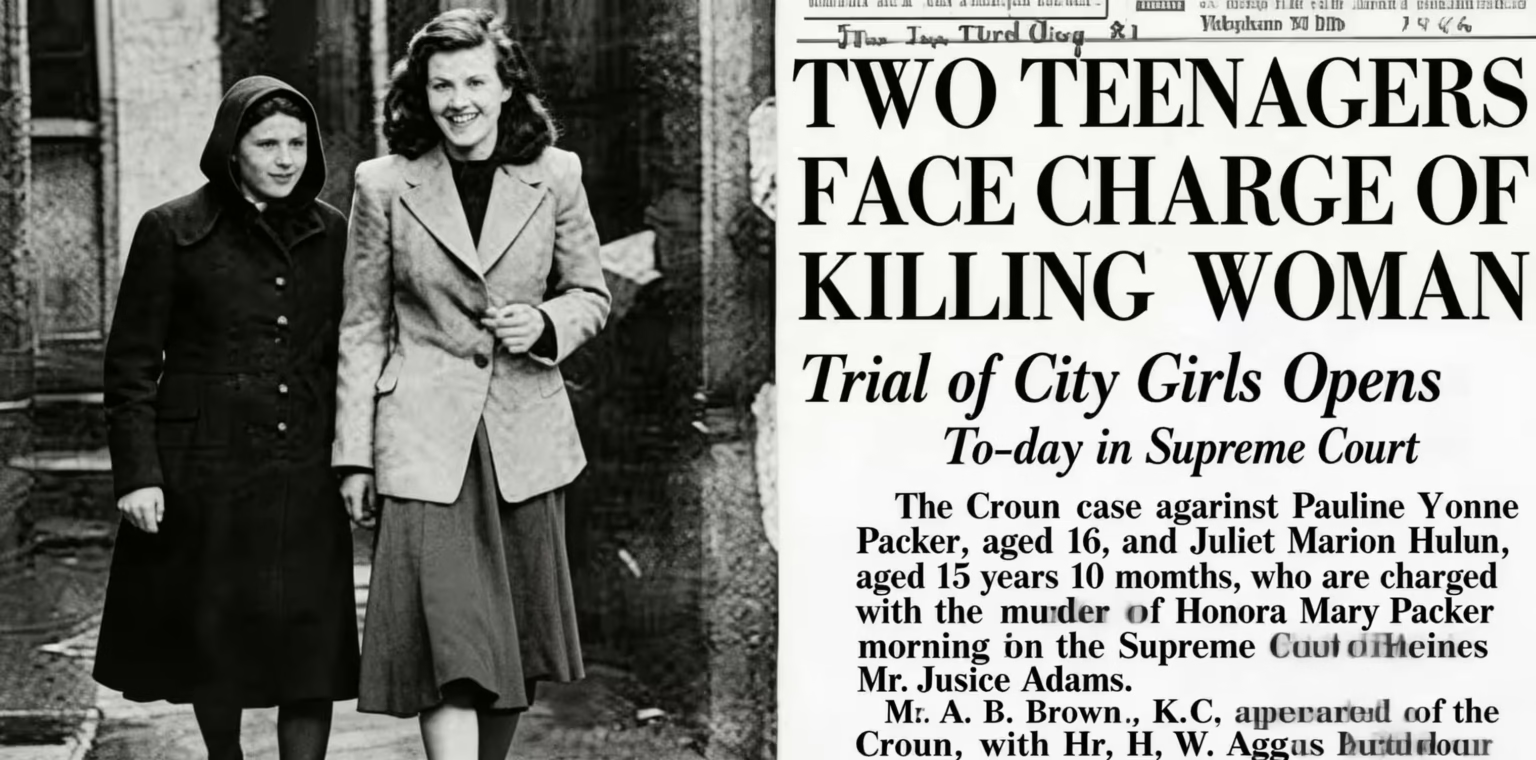
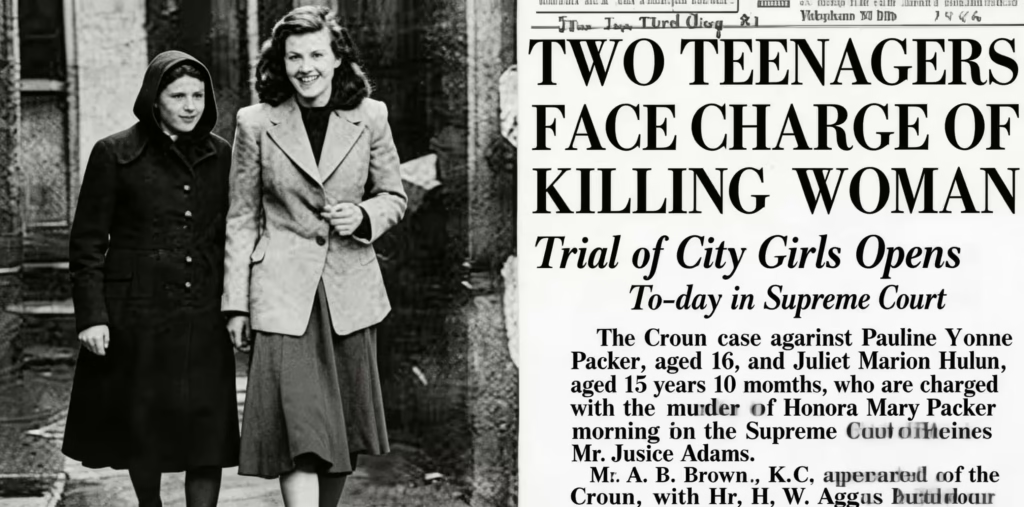
The victim’s teenage daughter, Pauline Parker, and Pauline’s close friend, Juliet Hulme, were soon identified as the perpetrators. Pauline was 16 years old and Juliet was 15. The revelation that two schoolgirls had planned and carried out such a violent act stunned the country. Because of the girls’ age, social background, and reportedly intense friendship, the case generated enormous public attention.
What makes the Honorah Parker murder case especially memorable is not only the violence involved, but the evidence that showed the murder had been deliberately planned. Diaries, contradictions in statements, and the discovery of the weapon quickly transformed the case from a suspicious death into one of the most infamous solved crimes in New Zealand history.
The Social Background Behind the 1954 New Zealand Murder Case
To understand why the 1954 New Zealand murder case drew so much attention, it helps to know something about the people involved.
Pauline Parker was born Pauline Yvonne Parker in 1938. She grew up in Christchurch in a modest working-class setting. Her parents, Herbert Rieper and Honorah Parker, lived together but were not legally married, something that became public knowledge during the investigation and trial. That detail attracted attention at the time because social attitudes in the 1950s were far more judgmental than they are today.
Juliet Hulme came from a very different environment. Born in London, she moved to New Zealand with her family in 1948. Her father, Henry Hulme, was an academic who became associated with the University of Canterbury. The Hulme family lived in a socially prominent setting compared with Pauline’s household.
Despite their different backgrounds, Pauline and Juliet became close while attending Christchurch Girls’ High School. Both had experienced serious health issues in childhood, and some accounts suggest this helped create an early bond between them. Their friendship deepened rapidly and became intense enough to alarm adults around them.
This contrast between the girls’ worlds became a major part of how the case was discussed. The public saw not just a murder, but a collision of class, family instability, teenage isolation, and emotional dependency.
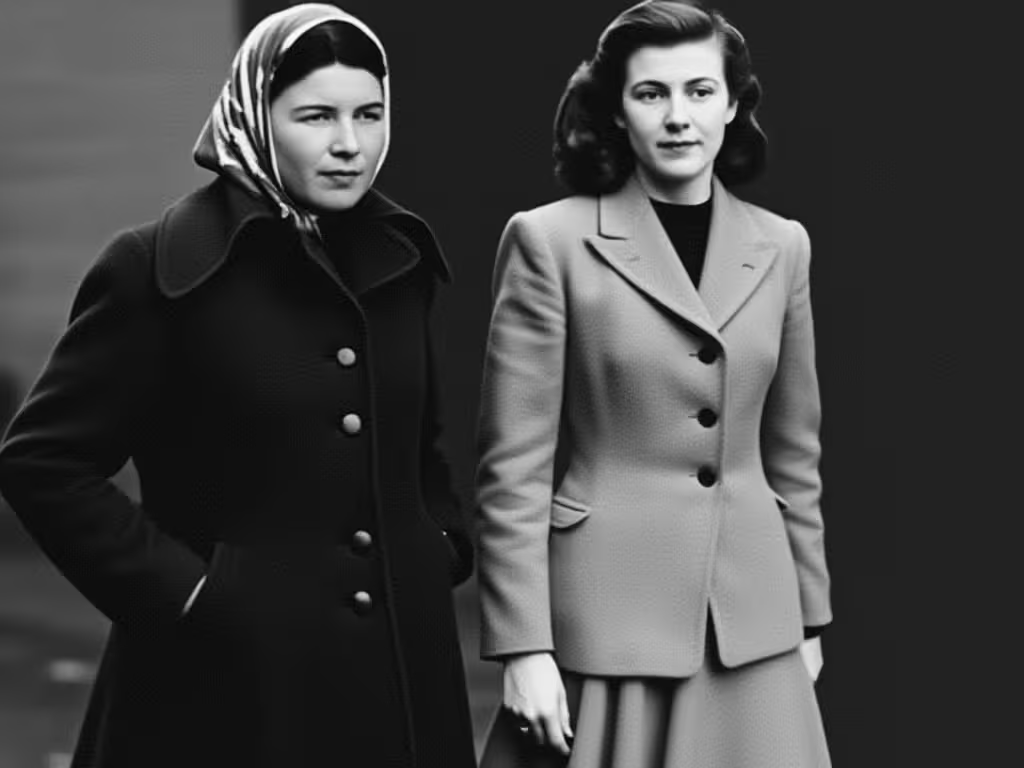
Pauline Parker and Juliet Hulme’s Intense Friendship
Any accurate retelling of the teenage killers true story must address the unusual and all-consuming friendship between Pauline Parker and Juliet Hulme.
The two girls reportedly created a rich private world together. They wrote stories, imagined elaborate fictional settings, and built a shared emotional universe that seemed more important to them than ordinary life. For two bright teenagers, this fantasy life may at first have appeared harmless, even creative. But over time, it became increasingly disconnected from reality.
Their families became concerned about the depth of the relationship. In the social climate of the early 1950s, adults often interpreted close same-sex friendships through the lens of moral panic and fear. Whether or not the relationship was sexual became a topic of public speculation, especially during and after the trial. That speculation often overshadowed the actual crime and reflected the attitudes of the era more than clear evidence.
What seems more certain is that the girls were emotionally dependent on one another. Their attachment became stronger as outside pressures increased. Family tensions, school life, health issues, and the fear of separation all contributed to a dangerous mindset.
When discussing how the Parker Hulme murder case solved, this emotional bond is central. Investigators and prosecutors came to believe that the murder was the final expression of a shared plan born from obsession and fear of being torn apart.
The Events That Led to Murder
By 1954, both girls were facing major changes in their home lives. Juliet Hulme’s parents were dealing with serious personal and family problems, including separation. Plans were made for Juliet to leave New Zealand and live abroad, reportedly in South Africa, with relatives. That meant she and Pauline would be separated.
This prospect devastated both teenagers. They began discussing ways to stay together. One idea was for Pauline to travel as well, but Pauline believed her mother would never allow it. In their minds, Honorah Parker became the obstacle preventing their future.
This is the chilling turning point in the Honorah Parker murder case. Instead of accepting the separation, Pauline and Juliet decided that removing Pauline’s mother was the only solution. Their long-range dreams reportedly included leaving for a glamorous future, possibly involving writing or filmmaking in places such as America. These fantasies gave their violent thinking a strange sense of purpose.
The murder was not a sudden emotional outburst. According to later evidence, it was planned. That fact became crucial in court and in public understanding of the crime. The Parker Hulme murder case solved because investigators were able to prove intent, preparation, and deception rather than an accident or spontaneous quarrel.
What Happened on 22 June 1954
On 22 June 1954, Pauline Parker, Juliet Hulme, and Honorah Parker went out together in Christchurch. They had tea at a kiosk in Victoria Park before setting off on a walk through a wooded area. At some point along the path, Pauline and Juliet attacked Honorah.
The murder weapon was a piece of brick concealed in a stocking. The attack was frenzied and fatal. Honorah suffered severe injuries and died at the scene.
After the killing, the girls ran back and claimed that Honorah had fallen and struck her head. At first glance, that explanation may have sounded possible. A park setting, a rough path, and visible injuries could create temporary confusion. But the scene told another story.
The 1954 New Zealand murder case quickly moved from suspicious death to homicide because the injuries did not match a simple accidental fall. The number and severity of the wounds immediately raised doubts. Investigators began to examine the girls’ account more closely.
This moment is essential to understanding how the Parker Hulme murder case solved. The offenders tried to disguise the crime as an accident, but physical evidence and inconsistencies in their story made that explanation collapse almost immediately.
The Investigation: How the Crime Was Solved
The phrase Parker Hulme murder case solved reflects how quickly the false story unraveled once police looked carefully at the facts.
1. The Injury Pattern Did Not Fit an Accident
Honorah Parker’s wounds were too extensive and too severe to be explained by a single fall. Investigators recognized that the injuries suggested repeated blows rather than accidental trauma.
2. The Murder Weapon Was Found
Police discovered the weapon in the nearby woods: a brick or half-brick wrapped in a stocking. This was powerful evidence that the death was caused by an intentional assault.
3. The Girls’ Story Was Weak
Pauline and Juliet said Honorah had fallen. But their behavior, the physical scene, and the nature of the injuries all raised questions. As investigators pressed further, the accident story lost credibility.
4. Pauline Parker’s Diary Was Critical
One of the most important breakthroughs came from Pauline’s diary. Investigators found entries that strongly suggested premeditation. This evidence transformed the case. It was no longer only about suspicious circumstances at the scene; now police had written proof pointing to a plan.
The diary became central to the prosecution because it showed mindset and intention. In many true crime cases, establishing motive can be difficult. In the Honorah Parker murder case, the diary helped explain not only what happened, but why.
5. The Timeline Supported Deliberate Action
The outing itself appeared structured. Tea at the kiosk, the walk, and the chosen location all fit a planned setup rather than random tragedy. Police and prosecutors saw the sequence as evidence of a deliberate trap.
Taken together, these elements explain exactly how the Parker Hulme murder case solved so effectively. The lies were exposed by forensics, physical evidence, and documentary proof.
Why the Case Became a Media Sensation
The teenage killers true story attracted extraordinary attention for several reasons.
First, the offenders were very young. Murders committed by teenagers always shock the public, but the involvement of two schoolgirls made the story seem even more unthinkable in the conservative culture of 1950s New Zealand.
Second, the victim was the mother of one of the attackers. Crimes involving family betrayal often generate intense emotional reactions, and the Honorah Parker murder case was no exception.
Third, the media became fascinated by the relationship between Pauline and Juliet. Rather than focusing only on the murder itself, newspapers and observers often emphasized speculation about sexuality, morality, and psychological abnormality. In the 1950s, such themes were treated sensationally.
Fourth, the case happened during a period of anxiety about juvenile behavior and social decline. As a result, the murder was used by some commentators as evidence that society was facing a moral crisis.
The result was that the 1954 New Zealand murder case became larger than a criminal proceeding. It turned into a cultural event, one that influenced public debate about youth, families, education, and morality.
The Trial of Pauline Parker and Juliet Hulme
The trial began later in 1954 and quickly became one of the most talked-about proceedings in New Zealand.
One detail that emerged was the legal use of the surname “Parker” for Pauline and her mother, rather than “Rieper,” due to the fact that Honorah and Herbert were not legally married. This may seem minor today, but it added another layer of social attention at the time.
The prosecution argued that Pauline Parker and Juliet Hulme had deliberately planned the murder of Honorah Parker in order to prevent the girls’ separation. The evidence supported that argument strongly, especially the diary material and the discovery of the concealed weapon.
The defense explored issues around the girls’ mental state, but the court ultimately found them guilty of murder on 28 August 1954.
Because they were minors, they were not eligible for the death penalty. Instead, each received a sentence of detention during pleasure, which in practice resulted in about five years of imprisonment.
From a legal standpoint, the Parker Hulme murder case solved in court through clear proof of planning, participation, and motive. The judgment confirmed what the investigation had already strongly indicated: Honorah Parker had not died in a tragic accident, but in a calculated attack by her daughter and daughter’s friend.
Sentencing and Imprisonment
The sentencing outcome remains one of the most debated parts of the Parker Hulme murder case solved narrative.
Many people then, and many later observers, were struck by how short the prison terms appeared compared with the seriousness of the crime. But juvenile justice laws treated offenders of their age differently. Since they were too young for execution, the court imposed imprisonment rather than the harshest punishment available for adult murderers of the period.
Juliet Hulme served her sentence at Mount Eden prison in Auckland. Pauline Parker also served time under juvenile detention arrangements. Their years in custody separated them physically and marked the beginning of very different adult lives.
There has long been a common belief that the girls were released on the condition they never contact one another again. Some later official comments suggested that this was not a formal condition in the legal sense, though the idea became deeply embedded in public memory.
Regardless, their release did not reunite them. Instead, each moved into a new identity and a different future.
Life After Release
Pauline Parker After Prison
After release, Pauline Parker reportedly lived under a new identity, Hilary Nathan, before eventually moving abroad. Later reports placed her in England, where she lived a quiet and highly private life. Over the years, accounts suggested she became deeply religious and expressed remorse for the killing.
Her silence added to public fascination. Unlike many people tied to famous crimes, Pauline did not seek media attention. Statements attributed to family members suggested she spent much of her later life in retreat, carrying the burden of what had happened.
Juliet Hulme After Prison
Juliet Hulme’s later life was more publicly known because she became famous under another name: Anne Perry, the successful historical crime novelist. For years, many readers did not know of her connection to the 1954 New Zealand murder case. When the connection became widely recognized, it renewed global interest in the old crime.
Juliet, like Pauline, later commented on the obsessive nature of the friendship, though she disputed some of the assumptions made about their relationship. She died in 2023.
The contrast between their adult lives is striking. One disappeared into privacy; the other became a bestselling author. Yet both remained permanently linked to the Honorah Parker murder case.
The Role of Pauline Parker’s Diary
If one piece of evidence symbolizes how the Parker Hulme murder case solved, it is Pauline Parker’s diary.
Diaries can be powerful evidence in criminal cases because they preserve private thoughts without the immediate pressure of police questioning. In this case, the diary reportedly contained entries that made clear the girls had discussed killing Pauline’s mother. That moved the case beyond suspicion and into documented premeditation.
For investigators, the diary was invaluable because it:
- supported the theory of planning,
- established motive,
- contradicted the claim of accidental death,
- and helped prosecutors explain the mental world the girls shared.
The diary did not stand alone. It worked alongside physical evidence, witness statements, and the crime scene. But it gave the case a level of psychological clarity that many murder investigations never obtain.
That is one major reason the Parker Hulme murder case solved with such force in the public imagination. People were horrified not just by the act, but by the written proof that it had been thought through in advance.
Public Reaction and Lasting Cultural Impact
The teenage killers true story did not fade after sentencing. Instead, it entered New Zealand’s cultural memory and eventually reached a much wider international audience.
The case was later examined in books, documentaries, and dramatizations. It became a reference point whenever people discussed juvenile murder, female criminality, or intense adolescent relationships. Scholars and writers looked at it from many angles: psychological, legal, historical, and social.
It also influenced moral debates in New Zealand during the 1950s. Some officials and commentators treated the crime as proof that young people were becoming morally corrupted. Whether that interpretation was fair is another matter, but it shows how strongly the case affected national thinking.
Even decades later, the murder remained powerful because it combined so many disturbing themes:
- youth,
- secrecy,
- family betrayal,
- fantasy,
- class difference,
- and planned violence.
For historians of crime, the Honorah Parker murder case is important not only because it was shocking, but because it reveals so much about the era in which it happened.
Why the Parker–Hulme Case Still Matters Today
Modern readers often revisit the Parker Hulme murder case solved for more than curiosity. The case continues to matter because it raises enduring questions.
Juvenile Responsibility
How should society punish teenagers who commit very serious crimes? The case remains a notable example in discussions about youth justice.
Media and Moral Panic
The trial showed how quickly public discussion can shift from facts to social fears. In the 1950s, commentary often focused on sexuality and “moral decline” rather than solely on evidence.
Obsession and Isolation
The relationship between Pauline and Juliet demonstrates how emotional dependence, fantasy, and crisis can feed dangerous behavior when no healthy intervention works in time.
Reinvention After Crime
Both women lived long lives after prison, and their stories invite difficult questions about remorse, rehabilitation, and whether notorious offenders can ever escape the past.
The reason this 1954 New Zealand murder case still resonates is that it does not fit neatly into one category. It is a family murder, a juvenile crime, a planned conspiracy, and a cultural flashpoint all at once.
Final Analysis: How the Parker–Hulme Murder Case Was Solved
So, how was the Parker Hulme murder case solved?
The answer lies in the combination of strong physical evidence and documented intent. Police quickly realized Honorah Parker’s injuries were inconsistent with a fall. They found the hidden weapon. They recognized that Pauline and Juliet’s version of events did not hold up. Most importantly, Pauline Parker’s diary provided evidence of planning and motive.
That combination made the Honorah Parker murder case one of the clearest examples of a staged accident being exposed by investigation. The murder may have been designed to look like a tragic mishap in the park, but the truth emerged almost immediately under scrutiny.
The case remains one of New Zealand’s most infamous solved crimes because the facts are both shocking and unforgettable. For anyone researching a teenage killers true story, the Parker–Hulme case stands out as a grim example of how adolescent obsession, shared fantasy, and fear of separation led to murder.
More than seventy years later, the 1954 New Zealand murder case still compels attention. Not because it is sensational alone, but because it forces us to confront difficult truths about youth, violence, and the human capacity for self-deception.
Conclusion
The Parker Hulme murder case solved a violent and disturbing crime, but it also opened a much larger conversation about society, psychology, and justice. Honorah Parker’s death was not an accident. It was the result of a deliberate plan formed by two teenagers who felt cornered by the future and chose violence as their answer.
The investigation succeeded because detectives looked beyond appearances. The scene, the injuries, the weapon, and the diary all pointed in the same direction. By the time the case reached court, the evidence of guilt was overwhelming.
Today, the Honorah Parker murder case remains one of the most important cases in New Zealand criminal history. It is remembered not only for its brutality, but for the way it exposed the hidden world of two girls whose bond turned deadly.
For readers of Cold Case Archive, this case belongs firmly in the category of Solved Cases—a haunting chapter in true crime history that still resonates across generations.
Disclaimer
The content presented in this article is based on publicly available information and is intended for informational and educational purposes only. While every effort has been made to ensure accuracy, details surrounding ongoing or unsolved cases may change over time as new information becomes available.
This article does not intend to make accusations, assign guilt, or interfere with any active investigation. Any individuals mentioned are presumed innocent unless proven guilty in a court of law.
The views and interpretations expressed are those of the writer and do not represent official statements from law enforcement agencies or affiliated organizations.
This content may include sensitive topics related to crime and violence. Reader discretion is advised.
If you have any information related to this case, please contact the appropriate local authorities.
Case Source:
This case information was compiled from publicly available sources, including official records, news reports, and case archive websites such as nzhistory.govt.nz. This article is intended for informational and educational purposes only, and all information is based on sources believed to be accurate at the time of writing.