





Introduction
The D B Cooper unsolved mystery remains one of the most baffling cases in modern criminal history. On a rainy evening in November 1971, a calm, well‑dressed man boarded Northwest Flight 305 in Portland, Oregon, and quietly informed a flight attendant that he was carrying a bomb. Within hours he had extorted a ransom, secured parachutes, and disappeared from the rear of a Boeing 727 somewhere over the Pacific Northwest.
The hijacker became known to the world as D. B. Cooper, a name born from a reporter’s error but forever linked to the Northwest Flight 305 mystery. The man himself, however, has never been identified. He left behind a tie, a few cigarette butts, a partial trail of banknotes, and a case file that would consume the FBI for decades.
This unidentified hijacker case is unique: the only unsolved incident of air piracy in commercial aviation history. No body has ever been found, most of the money never surfaced, and the man who stepped off that jetway in 1971 remains a ghost.
More than fifty years later, investigators, journalists, and amateur sleuths are still trying to answer the same questions: Who was D. B. Cooper? Did the hijacker who disappeared in 1971 survive the jump? And why, with so many clues, does this case remain unsolved?

Ai Generated image
Who Was D. B. Cooper?
The man who checked in for Northwest Orient Airlines Flight 305 on November 24, 1971, used the name Dan Cooper. “D. B.” came later, when a local reporter misheard the name of an early suspect and the error spread through wire services and national media coverage. The nickname stuck, even though the unidentified hijacker case has never been linked to anyone actually named D. B. Cooper.
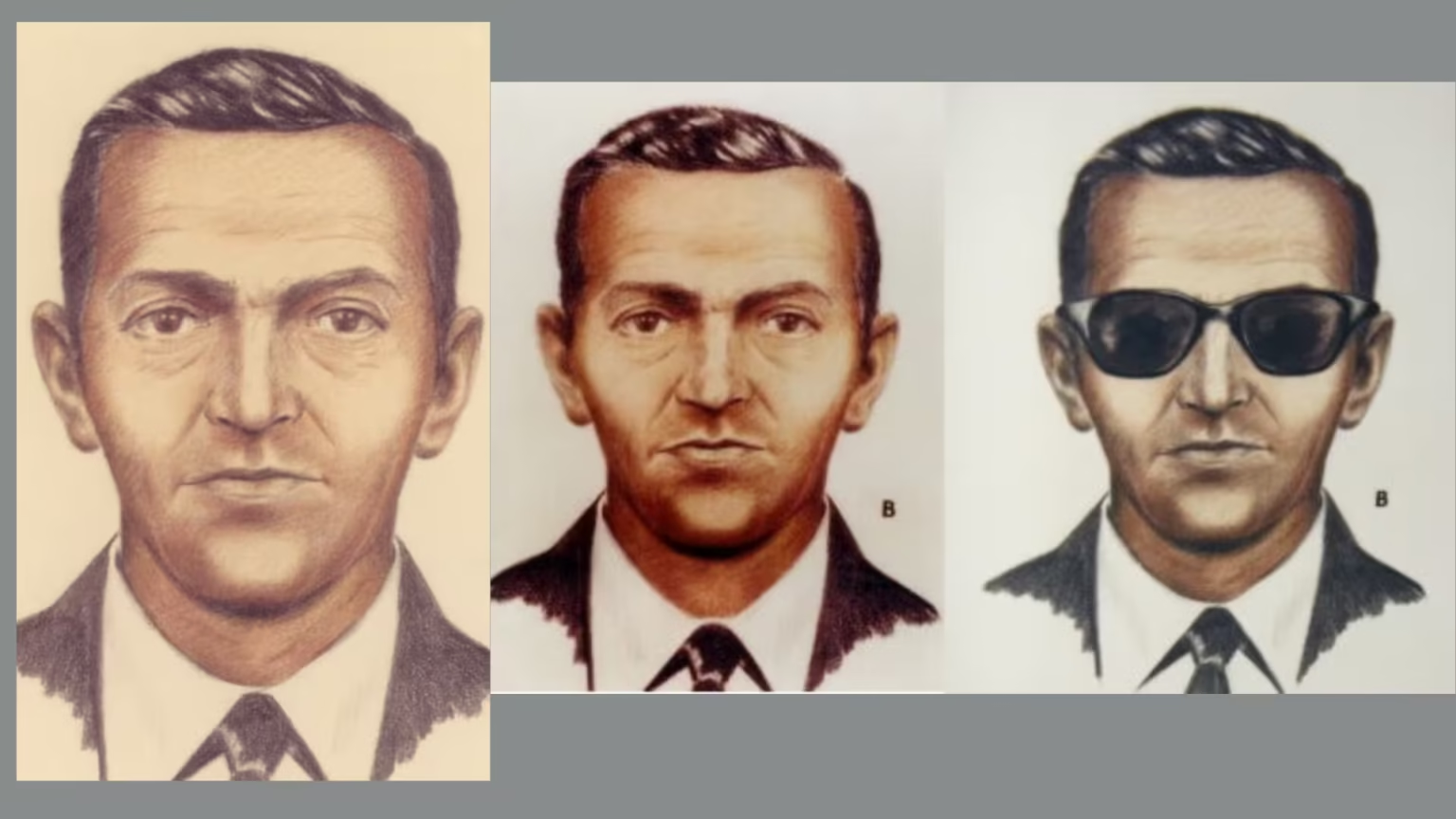
Witnesses described him as a man in his mid‑40s, about 5’9″ to 6’0″ tall, with a medium build, short dark hair, and brown eyes. He wore a dark business suit, white shirt, thin black tie, and a raincoat. He carried a black attaché case and a small paper bag. Nothing about him, at first glance, suggested he was about to engineer what would become the most famous D B Cooper unsolved mystery in American aviation.
He was calm, almost courteous. Flight attendants later recalled that he was polite, never raised his voice, and even tried to tip them. He ordered a bourbon and 7‑Up, smoked filter‑tipped cigarettes, and chatted casually about local geography and airline operations. He spoke clearly, with no obvious regional accent.
Investigators later concluded that this unidentified hijacker was no impulsive criminal. His manner, word choice, and technical knowledge suggested a methodical planner who had spent time around aircraft, possibly the military or aviation industry. Yet despite extensive profiling, hundreds of suspects, and a forty‑five‑year investigation, his true identity remains unknown.
The Hijacking of Flight 305
The Northwest Flight 305 mystery began quietly on Thanksgiving Eve, November 24, 1971. It was a short 30‑minute flight from Portland to Seattle, a routine hop in the Pacific Northwest.
Boarding the Aircraft
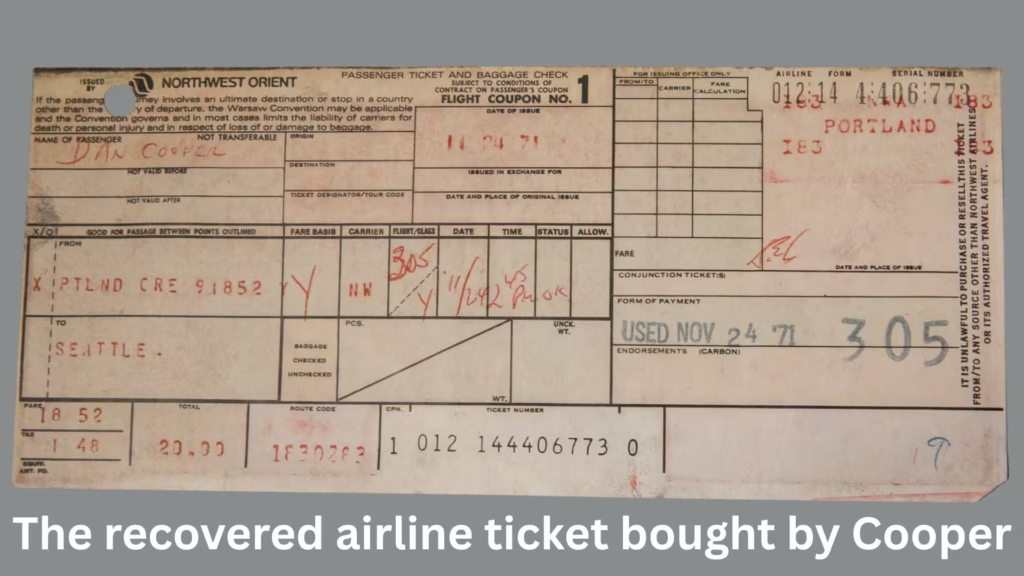
The man calling himself Dan Cooper bought his ticket with cash at the Portland airport counter. It was a one‑way ticket to Seattle, purchased under a common name that would soon become legendary.
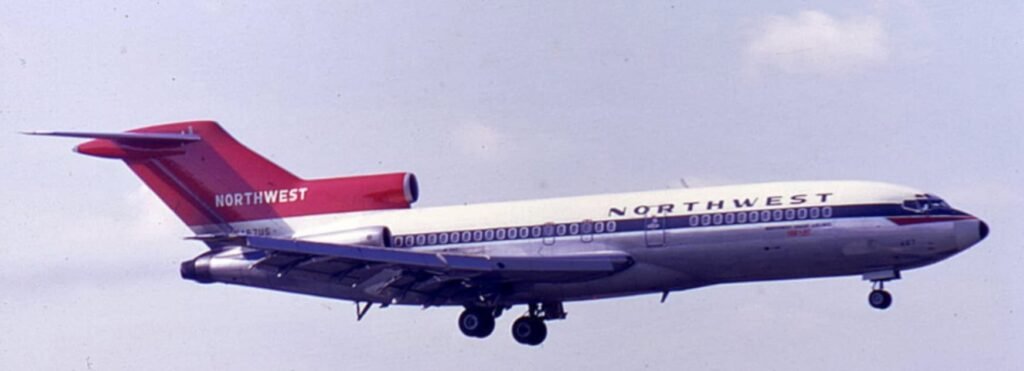
He boarded Northwest Flight 305, a Boeing 727, and took a seat near the rear of the cabin in seat 18E. At first he behaved like any other business traveler:
- He ordered a drink—bourbon and 7‑Up.
- He kept his attaché case close by.
- He blended into the crowd of 36 passengers and six crew.
No one on the ground or in the air suspected that this quiet man in a dark suit would be at the center of an unidentified hijacker case that would haunt investigators for generations.
The Note That Changed Everything
Shortly after takeoff, the cabin crew took their positions. Flight attendant Florence Schaffner sat in the jump seat near Cooper. He handed her a handwritten note. She assumed it was a phone number from a lonely businessman and slipped it into her purse unread.
Cooper leaned in and spoke softly: “Miss, you’d better look at that note. I have a bomb.”
The note stated, in block letters, that he had a bomb in his briefcase and wanted her to sit beside him. When she asked to see the bomb, he opened the attaché case. Inside were wires, cylinders, and batteries arranged to look like an explosive device. Whether it would have detonated was never determined; the mere threat changed the course of the flight and cemented the Northwest Flight 305 mystery in history.
From that point, the hijacker who disappeared in 1971 controlled the aircraft through quiet but firm instructions relayed via the flight attendants. There was no panic, no shouting—only a controlled, unfolding crisis.
Demands Made
Cooper’s demands were straightforward and precise, reflecting a level of planning that continues to fascinate investigators of the D B Cooper unsolved mystery:
- $200,000 in cash: specifically in $20 bills, “negotiable American currency.”
- Four parachutes: two main back parachutes and two reserve front chutes.
- A fuel truck on standby in Seattle so the plane could refuel without delay.
By asking for multiple parachutes, Cooper cleverly implied he might take a hostage with him. That detail alone likely discouraged authorities from sabotaging the equipment, a calculated move that still impresses analysts of this unidentified hijacker case.
The airline president authorized payment. While the passengers were told they faced a “minor mechanical difficulty,” the aircraft entered a holding pattern over Puget Sound as authorities scrambled to assemble the cash, locate parachutes, and prepare for a standoff no one had rehearsed.
The Mysterious Disappearance
After the 727 landed in Seattle, the ransom and parachutes were delivered, the passengers were released, and the crew remained. What followed turned a straightforward extortion into an enduring D B Cooper unsolved mystery.
Mid-Air Escape
Once the cash and parachutes were onboard and the jet refueled, Cooper gave the cockpit crew specific instructions:
- Fly toward Mexico City.
- Maintain a low altitude—around 10,000 feet.
- Keep the speed low, roughly 170–200 mph.
- Leave the landing gear down and the cabin unpressurized.
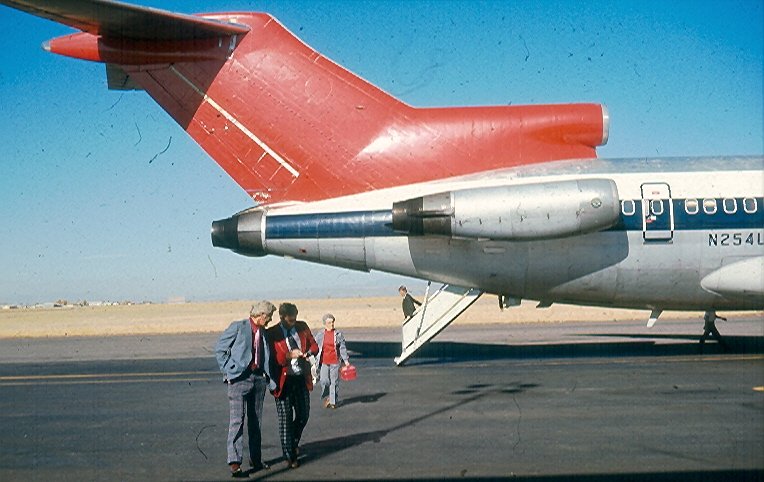
This configuration was unusual but within the capabilities of the Boeing 727. Crucially, this particular model featured an aft stairway that could be lowered in flight—knowledge that only a relatively small circle of people, including certain military and aviation personnel, were likely to possess in 1971.
After takeoff from Seattle, with only Cooper and four crew members remaining aboard, he ordered flight attendant Tina Mucklow to stay near him initially, then eventually to retreat to the cockpit and not return.
At approximately 8:00 p.m., a warning light indicated the rear stairway had been deployed. A few minutes later, the aircraft experienced a sudden shift in pitch, as if weight had abruptly left the rear section. Pilots trimmed the plane and continued toward Reno for the scheduled refueling stop.
When the jet landed in Nevada shortly after 11:00 p.m., law enforcement surrounded the aircraft. The rear stairs were still down. The interior was intact. The bomb was gone. So was the hijacker who disappeared in 1971.
Possible Landing Zone
Determining where Cooper landed—and if he landed alive—has been central to the Northwest Flight 305 mystery. The flight path, weather, airspeed estimates, and timing of the rear stair deployment all factor into the search area.
Early calculations pointed to a heavily forested region of southwest Washington, near the Lewis River and the slopes south of Mount St. Helens. Later re‑analysis, refined by additional radar and wind data, suggested an area near the Washougal River watershed.
This landscape is unforgiving: dense timber, steep ridges, fast rivers, and cold November rain. It is entirely plausible that a man parachuting at night into those conditions would not survive. Yet no body, parachute canopy, or equipment definitively tied to Cooper has ever been recovered in those woods.
The D B Cooper unsolved mystery hinges on that void. Did the unidentified hijacker vanish into the trees and die unseen? Or did he slip through the darkness, stash the money, and walk out of the forest to a new life?
Investigation and Evidence
From the moment Flight 305 reported the hijacking, the case drew intense federal scrutiny. Over time, the unidentified hijacker case would become one of the FBI’s most extensive and puzzling files.
FBI Involvement
The FBI opened a major investigation immediately, codenamed NORJAK (Northwest Hijacking). Agents interviewed crew and passengers, airline personnel, and airport staff in Portland, Seattle, and Reno. They compiled composite sketches, reconstructed the flight path, and analyzed every scrap of physical evidence from the aircraft.
The Northwest Flight 305 mystery would stay open as an active federal investigation for 45 years. The case grew to 66 volumes of reports, leads, laboratory analyses, and suspect files. Yet the essential questions—identity, survival, motive—remained unsettled.
In 2016, the FBI officially suspended active field work on the case, citing the need to redirect resources. The D B Cooper unsolved mystery, however, was not closed. Agents still accept genuinely new physical evidence, and the extensive files are preserved for public and historical review.
Key Evidence Found
Despite Cooper’s efforts to leave no trace, he did not depart Flight 305 empty‑handed in forensic terms. Investigators recovered several key items that anchor the unidentified hijacker case:
- A black clip‑on tie and tie clip left on seat 18E. Microscopic analysis decades later revealed particles of titanium and other industrial materials, hinting at possible exposure to aerospace or manufacturing environments.
- Cigarette butts from the armrest ashtray. These could have been a DNA goldmine, but were inadvertently destroyed years before modern DNA testing became standard.
- A partial DNA profile from the tie, developed in the early 2000s. The source, however, cannot be definitively linked to Cooper—it could belong to a factory worker, retailer, or earlier wearer of the tie.
- Two of the four parachutes, left behind in the cabin—one main chute intact, one reserve canopy cut up, likely to improvise a bag or harness for the money.
Investigators also obtained the ransom cash from a Seattle bank: 10,000 $20 bills recorded on microfilm, a crucial step that made it possible to track any future appearance of the money connected to the D B Cooper unsolved mystery.
Search Efforts
From the winter of 1971 into the mid‑1970s, search operations ranged from meticulous ground sweeps to aerial surveys:
- Army units, National Guard personnel, sheriff’s deputies, and volunteers combed the presumed drop zone on foot.
- Helicopters and fixed‑wing aircraft scanned for parachute fabric, disturbed trees, or a body.
- Lakes and reservoirs, including Lake Merwin, were probed by divers and even small submersibles.
Nothing clearly tied to Cooper turned up.
Then, in February 1980, a breakthrough—or possibly a red herring—surfaced on the banks of the Columbia River. An eight‑year‑old boy vacationing with his family near a spot called Tina Bar uncovered three decaying bundles of $20 bills totaling $5,800. The serial numbers matched the Cooper ransom.
The find reignited public fascination with the Northwest Flight 305 mystery but raised new questions:
- How did the money get there?
- Why were only three bundles found?
- Why had the rubber bands apparently survived long enough to suggest the bills entered the river years after the hijacking?
Hydrologists and geologists examined sediment layers and river patterns. Diatom analysis decades later suggested the cash likely entered the water months after the 1971 jump, not immediately. Yet no larger cache of ransom money has ever been discovered, and none of the bills has surfaced in ordinary circulation.
The cash at Tina Bar remains the only confirmed ransom money ever found outside the aircraft—a tantalizing but incomplete clue in the D B Cooper unsolved mystery.
Theories About His Fate
With physical evidence limited and the trail long cold, competing theories have emerged about what became of the hijacker who disappeared in 1971.
Theory 1 – Did Not Survive
One camp, including many former investigators, believes Cooper died during or shortly after the jump. Their reasoning:
- Conditions: It was a dark, rainy, moonless night over rough, forested terrain. Visibility was poor, and Cooper lacked clear knowledge of his exact location.
- Equipment: He jumped in business attire, with no confirmed helmet, specialized boots, or cold‑weather gear. At 10,000 feet in November, wind chill can plunge far below freezing.
- Parachute choice: Evidence suggests he may have taken at least one older, less steerable emergency chute. Another of the chutes provided was actually a non‑functional training reserve, and what he did with it remains unknown.
- No spending trail: Decades of monitoring bank records, casinos, racetracks, and large‑cash businesses have never produced a verified ransom bill, apart from those at Tina Bar.
Under this theory, the unidentified hijacker case ends in a remote grave: a body never found, bones long scattered or concealed beneath dense canopy and erosion. The money, perhaps, lies fragmented or buried somewhere in the Pacific Northwest wilderness.
Theory 2 – Survived and Escaped
The opposing theory—favored by many amateur sleuths and some former agents—is that Cooper survived and walked away. They argue:
- No remains, parachute, or clothing definitively tied to the hijacker have ever been recovered despite extensive searches.
- Copycat hijackers in similar or worse conditions survived jumps from the same type of aircraft.
- The partial cash discovery along the Columbia River suggests some post‑jump handling of the money inconsistent with an immediate fatal landing.
- The D B Cooper unsolved mystery might be unsolved precisely because the man was competent enough to vanish and keep quiet for the rest of his life.
In this scenario, the hijacker who disappeared in 1971 may have:
- Landed injured but alive,
- Hidden or lost most of the money,
- Traveled out of the region, and
- Lived out his days under a different name, silent about the crime.
Theory 3 – Identity Theories
The hunt for a name has generated a long list of suspects: military veterans, skydivers, ex‑convicts, airline employees, reclusive neighbors, and even individuals who allegedly made deathbed confessions.
Some key patterns emerge when reviewing these candidates in the context of the unidentified hijacker case:
- Many suspects fit parts of the profile—aviation background, connection to the Pacific Northwest, criminal history, or resemblance to composite sketches.
- Some had plausible motives, such as financial distress, grudges against institutions, or a history of risky behavior.
- Others were pushed into the spotlight by relatives, authors, or documentarians eager to solve the Northwest Flight 305 mystery.
Yet in case after case, crucial evidence fails to align:
- Alibis place the suspect elsewhere.
- Fingerprints and DNA do not match available samples.
- Physical descriptions diverge from what crew and passengers reported.
As of today, no suspect has ever been confirmed as the D B Cooper of legend beyond a reasonable doubt, leaving the unidentified hijacker case still officially open and unsolved.
Why the Case Was Never Solved
The enduring nature of the D B Cooper unsolved mystery is not just a matter of a clever criminal. The era, technology, and investigative environment of the early 1970s all played a role.
Limited Technology in the 1970s
In 1971, investigators lacked many tools that are now routine:
- No advanced DNA sequencing or widespread DNA databases.
- Limited surveillance at airports—no omnipresent CCTV, no digital check‑in records.
- Aircraft tracking and radar logs were less precise than modern flight data monitoring.
The cigarette butts that could have yielded a definitive DNA profile were preserved initially, only to be destroyed years before techniques matured. The tie did yield some DNA decades later, but too little and too ambiguous to close the unidentified hijacker case.
Lack of Direct Evidence
Despite the high‑stakes nature of the hijacking, the Northwest Flight 305 mystery rests on a surprisingly thin set of hard facts:
- A handful of eyewitness descriptions, subject to human memory limits.
- A few physical items left behind.
- A partial flight path reconstruction with multiple variables—wind, speed, timing—each adding uncertainty to the drop‑zone calculations.
Cooper’s careful retrieval of his handwritten notes, his insistence on keeping items like his own matchbook, and his decision to use a common alias closed off many investigative avenues. The result was a vast case file built around a very small core of verifiable evidence.
Changing Investigative Priorities
For decades, the FBI kept the D B Cooper unsolved mystery on its active docket, periodically revisiting leads and testing new forensic methods. By 2016, with no decisive progress and more urgent threats consuming federal attention, the Bureau formally suspended active field investigation.
Agents emphasized that the case was not closed, but the practical reality is that the unidentified hijacker case now survives primarily in archival form—and in the work of journalists, authors, and independent researchers who continue to dig on their own time.
Cultural Impact of the Case
Few criminal cases have embedded themselves as deeply in popular culture as the D B Cooper unsolved mystery. The image of a cool, composed hijacker stepping into the night with a bag of cash captivated the public imagination almost immediately.
The Northwest Flight 305 mystery has inspired:
- Books and documentaries dissecting the case from every angle.
- Dramatizations in films and television series.
- Songs, comics, and even local festivals in the Pacific Northwest.
The unidentified hijacker case also reshaped aviation. In the year following the hijacking, several copycat attempts occurred, prompting airlines and regulators to rapidly harden security. The now‑familiar “Cooper vane,” a mechanical device installed on Boeing 727 rear stairs to prevent them from being lowered in flight, is a direct product of this case.
More broadly, airport metal detectors, baggage screening, and stricter boarding procedures—now seen as standard—accelerated in part because of the hijacker who disappeared in 1971. Cooper may have slipped away, but the system itself changed in response.
Key Unanswered Questions
Decades of investigation have not resolved the central riddles at the heart of the D B Cooper unsolved mystery. Several questions continue to drive research and debate:
Who was D. B. Cooper?
D. B. Cooper is the alias given to an unidentified man who hijacked Northwest Orient Flight 305 in 1971, extorted $200,000 in ransom, and parachuted from a Boeing 727 over the Pacific Northwest, never to be seen again. His true identity remains unknown.
What happened on Northwest Flight 305 in 1971?
On November 24, 1971, a man calling himself Dan Cooper boarded Northwest Flight 305 from Portland to Seattle. He claimed to have a bomb, demanded $200,000 and four parachutes, released the passengers in Seattle, then forced the plane back into the air. Somewhere over southwest Washington, he lowered the rear stairs and parachuted into the night.
Why is the D. B. Cooper case still unsolved?
The case remains unsolved due to limited physical evidence, lack of advanced forensic tools in 1971, poor visibility during the jump, and the hijacker’s careful retrieval of notes and personal items. Despite decades of FBI investigation, no suspect has been definitively linked to the crime.
Did D. B. Cooper survive the jump?
No one knows for certain. Some investigators believe he died due to the bad weather, rough terrain, and lack of proper gear. Others argue that the absence of a body, parachute, or large amounts of money suggests the hijacker may have survived and escaped.
What evidence did investigators find in the D. B. Cooper case?
Key evidence includes a black clip‑on tie and tie clip left on seat 18E, cigarette butts in the ashtray, two of the four parachutes, and $5,800 in decomposed $20 bills found in 1980 on the bank of the Columbia River, confirmed as part of the ransom money.
How did the D. B. Cooper hijacking change aviation security?
The hijacking and subsequent copycat cases pushed authorities to tighten airline security. Airports introduced metal detectors, mandatory baggage screening, passenger vetting, and physical modifications to Boeing 727 rear stairs (the “Cooper vane”) to prevent mid‑air deployment.
Have there been serious suspects in the D. B. Cooper unsolved mystery?
Yes. Over a thousand serious suspects were investigated, including military veterans, skydivers, airline employees, and ex‑convicts. Some have been heavily publicized in books and documentaries, but the FBI has never confirmed any one person as D. B. Cooper.
Is the FBI still investigating the unidentified hijacker case?
In 2016, the FBI suspended active field investigation to focus on higher‑priority cases, but the file remains open. They continue to accept credible new physical evidence related to the hijacker, the parachutes, or the ransom money.
Conclusion
The D B Cooper unsolved mystery endures because it sits at the intersection of meticulous planning, limited evidence, and a cultural moment when commercial aviation was still relatively open and unwatched. A single man seized that moment, forced an airliner into a strange flight profile, walked away with a bag of cash—and then vanished from the historical record.
The Northwest Flight 305 mystery has resisted half a century of scrutiny. Investigators developed extensive profiles, evaluated more than a thousand suspects, and tested every piece of physical evidence they could recover. Yet the hijacker who disappeared in 1971 remains what he was the moment he stepped off that rear stairway: a question mark against the night sky.
For those drawn to unresolved crimes, the unidentified hijacker case offers a rare combination of concrete facts and open‑ended puzzles. Every surviving interview transcript, every forensic report, and every newly proposed suspect keeps the story alive—but none has yet closed it.
As long as the identity and fate of D. B. Cooper remain unknown, this case will continue to fascinate journalists, researchers, and readers. Awareness of the evidence—and its gaps—matters. Someone, somewhere, may still hold a memory, a document, or an overlooked item that could finally bring this D B Cooper unsolved mystery to a definitive end.
Until then, the name D. B. Cooper will remain shorthand for the perfect disappearing act: the hijacker who walked onto a plane in 1971 and walked off into legend.
The content on ColdCaseArchive.org, including this article on the D. B. Cooper unsolved mystery and the unidentified hijacker case, is provided for informational and educational purposes only.
All information presented is based on publicly available records, historical sources, media reports, and investigative materials that were accessible at the time of writing. While every effort has been made to research and present the Northwest Flight 305 mystery accurately and responsibly, we cannot guarantee that all details are complete, current, or free from error.
ColdCaseArchive.org does not assert, imply, or endorse the guilt or innocence of any individual named or discussed in connection with the D. B. Cooper case or any other case on this site. References to suspects, persons of interest, or theories are included for historical and journalistic context only and should not be interpreted as factual determinations, legal conclusions, or accusations.
Nothing on this website should be considered legal advice, investigative advice, or professional guidance. Readers are encouraged to consult original source documents, official case files, and qualified professionals for verification or further research.
Any resemblance between individuals discussed in speculative theories and living persons not previously connected to the case is purely coincidental. If you believe any material on this site is inaccurate, misleading, or infringes upon your rights, please contact the site administrator so that it can be reviewed and, if necessary, corrected or removed.
Case Source:
This case information was compiled from publicly available sources, including official records, news reports, and case archive websites such as FBI. This article is intended for informational and educational purposes only, and all information is based on sources believed to be accurate at the time of writing.