



By Cold Case Archive Investigative Team
In the quiet, rolling hills of North Wales, a chapter of American domestic terrorism history finally closed in November 2024. For over two decades, Daniel Andreas San Diego had been a ghost, a phantom presence on the FBI’s Most Wanted list, evading capture while becoming the poster child for a specific era of radical environmental activism. His story is not just one of crime and punishment, but a complex narrative of ideology, evasion, and international law enforcement cooperation.
The fugitive captured after 20 years Wales arrest marked the end of one of the longest manhunts for a domestic terrorism suspect in United States history. San Diego, a man once described by neighbors as a quiet IT consultant with a penchant for vegan marshmallows, was alleged to be a key figure in the 2003 California bombings animal rights case. His eventual apprehension near Conwy, Wales, brought a dramatic conclusion to a saga that began with explosions in the San Francisco Bay Area and spanned continents.
To understand the magnitude of this capture, one must look back at the events that placed San Diego on the radar of federal agents. The Daniel Andreas San Diego case explained is a study in how radicalization can hide in plain sight. From his origins in Berkeley, California, to his final days as a fugitive using the alias “Danny Webb,” San Diego’s journey offers a chilling look into the world of the Animal Liberation Brigade. This FBI most wanted eco terrorism suspect story is a testament to the persistence of law enforcement and the enduring consequences of domestic terrorism.
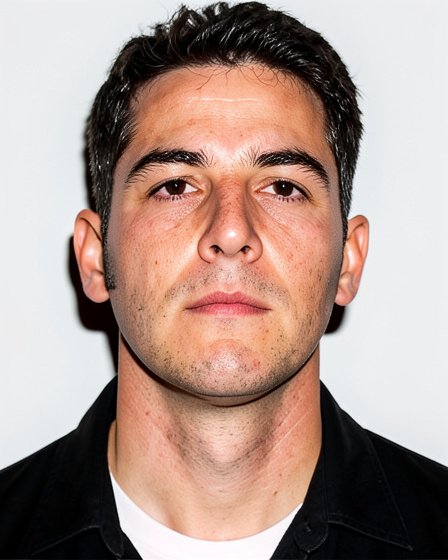
The Radicalization of an IT Consultant
Daniel Andreas San Diego was born on February 9, 1978, in Berkeley, California, a city known for its progressive politics and activist history. Growing up in nearby San Rafael, he attended Terra Linda High School and later took classes at the College of Marin. By all outward appearances, he was an unassuming young man. He worked at his high school’s radio station, KSRH, where he developed a taste for heavy metal and rock music. However, beneath the surface of a typical California youth, a rigid ideological framework was forming.
As a young adult, San Diego adopted the “straight edge” lifestyle, a subculture of hardcore punk that advocates for abstinence from alcohol, tobacco, and recreational drugs. He took this further by adopting a strict vegan diet, eliminating all meat and milk products. While many adopt these lifestyles for health or ethical reasons, for San Diego, these choices became intertwined with a radical political worldview. He became an environmentalist and an animal liberationist, eventually aligning himself with the fringe elements of the animal rights movement.
At the time of the crimes that would define his life, San Diego was living in Schellville, a small, rural community outside of Sonoma, California. He worked as a computer specialist, a skill set that would later prove crucial to his ability to evade detection. His landlord described him as “very nice and personable,” noting that San Diego claimed to be starting a business venture selling vegan marshmallows made without gelatin. To the outside world, he gave no impression of holding radical views on animal rights. The FBI, however, would later claim this benign persona was all an act, a mask worn by a man planning violent acts of domestic terrorism.
The 2003 California Bombings Animal Rights Case
The tranquility of the Bay Area was shattered in the late summer of 2003. The 2003 California bombings animal rights case refers to a series of coordinated attacks targeting corporations linked to animal testing. The FBI believes San Diego has unspecified ties to an Animal Liberation Brigade cell responsible for these bombings. Specifically, the targets were chosen because of their business relationships with Huntingdon Life Sciences (HLS), Europe’s largest drug and chemical animal testing laboratory.
The campaign of violence began on August 28, 2003. On that day, two sophisticated homemade bombs exploded approximately one hour apart at the Chiron Corporation in Emeryville, California. Chiron was a client of HLS, and activists had previously targeted the company, accusing them of being “puppy killers” as part of the Stop Huntingdon Animal Cruelty (SHAC) campaign. The explosions caused minor property damage but, miraculously, no injuries. The FBI believes the second bomb was specifically timed to target first responders who would arrive at the scene of the first explosion, a tactic that highlighted the lethal intent behind the devices.
The violence escalated a month later. On September 26, 2003, another bomb exploded at the Shaklee Corporation in Pleasanton, California. Like the previous devices, this bomb caused property damage but resulted in no casualties. However, the construction of the device was particularly alarming to investigators. The bomb was wrapped with nails to produce shrapnel, designed to maximize injury and death had anyone been in the immediate vicinity. The bombs used in the 2003 California bombings animal rights case utilized ammonium nitrate explosives and mechanical timers, indicating a level of technical proficiency consistent with San Diego’s background in IT and electronics.
Following each bombing, a group calling itself the “Revolutionary Cells – Animal Liberation Brigade” claimed responsibility via email. These messages demanded that the businesses terminate their involvement with Huntingdon Life Sciences and threatened future violence. While FBI agents admitted they could not definitively prove San Diego sent the emails, they believed he had ties to the group that did. The Bureau stated that San Diego is suspected of having carried out the bombings personally. The Daniel Andreas San Diego case explained often centers on these two specific dates in 2003, which transformed him from a person of interest into a primary suspect in a domestic terrorism investigation.
The Disappearance: Vanishing in San Francisco
As the investigation into the bombings intensified, the FBI placed San Diego under 24-hour surveillance in 2003. They were closing in, watching his every move, waiting for a slip-up or further criminal activity. However, San Diego proved to be as adept at evasion as he was at bomb-making.
On October 6, 2003, San Diego drove his car into downtown San Francisco. In a move that would become legendary in fugitive circles, he parked his vehicle near a subway station, left the engine still running, and simply walked away. He disappeared into the urban crowd, leaving behind his car and his old life. When FBI agents subsequently searched his parked vehicle, they found bomb-making equipment, confirming their suspicions and cementing his status as a dangerous fugitive.
This disappearance marked the beginning of a new phase in the FBI most wanted eco terrorism suspect story. San Diego had successfully shed his identity. He was no longer Daniel Andreas San Diego, the IT consultant from Schellville; he was a ghost. The FBI’s failure to apprehend him immediately allowed him to establish a new life underground, utilizing his technical skills to avoid digital footprints and his ideological network to potentially secure support, though the FBI has never publicly identified specific accomplices who aided his flight.
The Most Wanted List and the Digital Manhunt
In 2004, Daniel Andreas San Diego was indicted. He made history by becoming the first domestic terrorism suspect to be added to the FBI Most Wanted Terrorists List. He was also the first animal rights activist to receive this designation, highlighting the federal government’s shifting focus toward “eco-terrorism” as a significant national security threat.
For years, San Diego remained at large, becoming a high-profile target for the Bureau. The FBI most wanted eco terrorism suspect story gained renewed attention in 2014 as part of the FBI’s National Digital Billboard Initiative. San Diego’s face was featured on electronic billboards throughout California, Massachusetts, Oregon, Nevada, and Florida. His image was even displayed along the US-Canada border in New York and Washington State. The goal was to saturate the public consciousness with his image, hoping that a casual observer might recognize the fugitive.
The manhunt was plagued by false leads and dead ends. At one point, the FBI believed he was hiding in the Northampton, Massachusetts, area. In early 2014, the Bureau announced they had “credible intelligence” suggesting San Diego might be on Hawaii’s Big Island. These tips, while promising, ultimately led nowhere. San Diego was also profiled on America’s Most Wanted five times after his disappearance, further illustrating the difficulty authorities faced in tracking him down.
As of February 2022, a reward of up to US$250,000 was available for information leading to his arrest. Despite the financial incentive and the massive publicity, San Diego managed to stay off the grid for more than two decades. The Daniel Andreas San Diego case explained often touches on the difficulty of finding a suspect who is highly intelligent, technically savvy, and motivated by a cause that provides a psychological justification for living as a fugitive.
Life on the Run: The “Danny Webb” Persona
How does a man survive for 20 years without being caught? In San Diego’s case, it appears he relied on a combination of careful planning, assumed identities, and perhaps a degree of luck. When he was finally apprehended, it was revealed that he had been living under the alias “Danny Webb.”
Upon his arrest in November 2024, San Diego was carrying an Irish passport with the name “Danny Stephen Webb.” This suggests that he had managed to secure fraudulent or altered travel documents, allowing him to cross international borders. The use of an Irish passport is particularly interesting given the history of conflict in Northern Ireland and the potential for document forgery networks, though the specific origin of the passport remains part of the investigative details.
Living as “Danny Webb,” San Diego seemingly integrated into a community in the United Kingdom. The quiet, rural nature of North Wales, where he was eventually found, mirrors the rural setting of Schellville, California, where he lived before the bombings. It is possible that he sought out isolated communities where a newcomer asking few questions could blend in. His background as a computer specialist would have allowed him to work remotely or in IT roles that did not require extensive background checks, further aiding his concealment.
The fugitive captured after 20 years Wales arrest revealed that San Diego had not just been hiding in a cave; he had been living a life, albeit a fabricated one. The ability to maintain a cover for such a long period speaks to the discipline instilled by his “straight edge” lifestyle. A man accustomed to denying himself basic pleasures like alcohol or meat might possess the psychological fortitude required to deny himself his true identity and family connections for decades.
The Capture: November 2024 in Wales
The end of the line came on November 25, 2024. Acting on intelligence that had likely been brewing for some time, the UK’s National Crime Agency (NCA) moved in. San Diego was captured in Maenan, near Llanrwst in Conwy, North Wales. The location, a small village in a valley, provided a stark contrast to the urban centers of California where his crimes were committed.
The arrest was executed without incident. San Diego, now 46 years old, was taken into custody. The discovery of the Irish passport in his possession confirmed his use of an alias and provided the link necessary for extradition proceedings. Following his arrest, he was sent to HMP Belmarsh, a high-security prison in London, awaiting the legal process that would determine his return to the United States.
The fugitive captured after 20 years Wales arrest was a significant victory for international law enforcement. It demonstrated the reach of the FBI and the cooperation between US and UK authorities. For the victims of the 2003 California bombings animal rights case—the employees of Chiron and Shaklee who had lived with the threat of violence—the arrest brought a sense of closure, even if the legal resolution was still years away.
The Legal Battle: Extradition and Human Rights
Following his capture, the focus shifted from the manhunt to the courtroom. San Diego appeared in court in London to face extradition to the U.S. to answer for the outstanding terrorist charges. However, the path to extradition was not immediate. In 2025, his attorneys argued vigorously against his return to the United States.
The defense team claimed that San Diego would not receive a fair trial in the U.S. This is a common argument in extradition cases, often citing the harshness of the American penal system or the potential for bias against terrorism suspects. The legal proceedings dragged on, highlighting the complexities of international law.
The breakthrough came in February 2026. Judge Samuel Goozee of the Westminster Magistrates’ Court ruled that San Diego could be extradited to the United States. The judge’s ruling effectively cleared the final judicial hurdle. However, the process was not yet complete. As of February 2026, the UK Home Secretary was yet to make the final decision on the extradition order.
Despite the delay, Sky News noted that the final approval was “expected to be a formality.” The judicial status listed in the case files indicates “Extradition from the United Kingdom to the United States (February 2026),” signaling that the legal machinery had turned in favor of the U.S. government. The Daniel Andreas San Diego case explained now enters its final chapter: the trial. Once back on American soil, San Diego will face the charges that have hung over his head for more than two decades.
The Ideology of the Animal Liberation Brigade
To fully understand the FBI most wanted eco terrorism suspect story, one must understand the ideology that fueled it. San Diego is believed to have ties to Stop Huntingdon Animal Cruelty (SHAC), an international campaign against Huntingdon Life Sciences. SHAC was known for its aggressive tactics, which ranged from peaceful protests to harassment and, in extreme cases, violence.
The Animal Liberation Brigade (ALB) and the Animal Liberation Front (ALF) operate as leaderless resistance movements. They do not have a central hierarchy; instead, they function as independent cells. This structure makes them incredibly difficult for law enforcement to infiltrate. A cell can plan and execute an attack without the knowledge of other members, and if one member is caught, they cannot give up the names of leaders because there are none.
San Diego’s alleged involvement with the ALB places him in a specific niche of domestic terrorism. Unlike religious or separatist terrorists, eco-terrorists like San Diego are motivated by a desire to protect the environment or animals. In their minds, they are not criminals; they are soldiers in a war against corporate greed and animal suffering. This moral conviction can make them particularly dangerous, as they believe their actions are justified by a higher cause. The 2003 California bombings animal rights case was not random violence; it was a calculated strike against companies they viewed as enemies of the animal kingdom.
The Impact on Domestic Terrorism Investigations
The capture of Daniel Andreas San Diego has significant implications for how domestic terrorism is investigated and prosecuted. For years, San Diego was the face of the FBI’s domestic terror list. His ability to evade capture for so long raised questions about the effectiveness of surveillance and the resources dedicated to non-jihadist terrorism.
However, his eventual arrest proves that no one can hide forever. The collaboration between the FBI and the UK’s National Crime Agency was crucial. It serves as a warning to other fugitives that international borders do not provide a safe haven. The fugitive captured after 20 years Wales arrest utilized modern forensic techniques, financial tracking, and human intelligence to locate a man who had successfully erased his digital footprint.
Furthermore, the case highlights the evolution of eco-terrorism. While the early 2000s saw a spike in incidents like the 2003 California bombings animal rights case, the tactics have shifted in recent years. The focus has moved somewhat from physical bombings to cyber-attacks and data breaches. Yet, the threat of physical violence remains, and the San Diego case serves as a reminder of the potential lethality of radical environmental groups.
Conclusion: Justice Delayed, Not Denied
The story of Daniel Andreas San Diego is a gripping FBI most wanted eco terrorism suspect story that spans generations. From the smoke of the Chiron Corporation explosion in 2003 to the cold damp of a Welsh village in 2024, it is a tale of persistence. San Diego, the man who once listened to heavy metal on a high school radio station and dreamed of selling vegan marshmallows, ended up as one of the most wanted men in America.
The Daniel Andreas San Diego case explained is more than just a timeline of events; it is a look into the mind of a radical and the machinery of justice that eventually caught up with him. As he awaits his final extradition to face trial, the victims of his alleged crimes can finally breathe a little easier. The bombs he allegedly built were designed to kill, and while they failed to take lives in 2003, the threat they posed was real.
The 2003 California bombings animal rights case will forever be a part of the history of domestic terrorism in the United States. It marked a period of heightened tension between animal rights activists and the biotechnology industry. San Diego’s capture closes the book on that specific era.
As the legal process moves forward in 2026, the world will be watching. The fugitive captured after 20 years Wales arrest is now a prisoner, his alias stripped away, his freedom gone. The long manhunt is over, but the questions remain: Who helped him? How did he fund his life on the run? And what does his capture mean for the future of the Animal Liberation Brigade? These are questions that may only be answered when Daniel Andreas San Diego finally stands trial in a California courtroom, answering for the 20 years he stole from the law.
For now, the Cold Case Archive records this as a victory for justice. The FBI most wanted eco terrorism suspect story has reached its conclusion, proving that even the most elusive fugitives can be brought to account, no matter how long it takes. The legacy of the 2003 California bombings animal rights case is no longer one of an unsolved mystery, but of a resolved investigation and a suspect facing the consequences of his actions.
📌 FAQ
Who is Daniel Andreas San Diego?
He is an American suspect accused of involvement in the 2003 California bombings and was listed on the FBI’s Most Wanted Terrorists list.
Was anyone killed in the bombings?
No, the explosions caused property damage but no reported injuries or deaths.
Where was he arrested?
He was captured in Wales, United Kingdom, in November 2024.
Why is the case important?
It highlights issues related to domestic terrorism, activism, and international law enforcement cooperation.
Disclaimer
The content presented in this article is based on publicly available information and is intended for informational and educational purposes only. While every effort has been made to ensure accuracy, details surrounding ongoing or unsolved cases may change over time as new information becomes available.
This article does not intend to make accusations, assign guilt, or interfere with any active investigation. Any individuals mentioned are presumed innocent unless proven guilty in a court of law.
The views and interpretations expressed are those of the writer and do not represent official statements from law enforcement agencies or affiliated organizations.
This content may include sensitive topics related to crime and violence. Reader discretion is advised.
If you have any information related to this case, please contact the appropriate local authorities.
Case Source:
This case information was compiled from publicly available sources, including official records, news reports, and case archive websites such as Fox News This article is intended for informational and educational purposes only, and all information is based on sources believed to be accurate at the time of writing.